
For perfectly cooked turkey at 350°F, plan on 13 to 15 minutes per pound for an unstuffed bird and 15 to 17 minutes per pound for a stuffed one, always cooking to an internal temperature of 165°F. This verdict comes from years of catering professional events and corporate gatherings where timing precision matters most. Whether you’re planning a boardroom luncheon or a family celebration, getting the roast time right ensures moist, flavorful meat without the stress of guesswork.
The challenge most hosts face isn’t following a recipe but managing the variables that affect actual cooking time. Oven accuracy, starting temperature of the bird, pan depth, and even how often you open the oven door all shift the timeline. That’s why professional caterers rely on weight-based formulas paired with thermometer checks rather than rigid hour counts. A 12-pound turkey should take roughly 2.5 to 3 hours unstuffed, but your oven and prep method will fine-tune that window.
Corporate event planners know the cost of serving undercooked poultry or dried-out breast meat. The same principles apply whether you’re roasting one bird for eight guests or coordinating multiple turkeys for a large gathering. Temperature consistency and proper resting time after cooking deliver results that look impressive and taste even better. This guide translates catering-level timing into practical steps you can replicate in any kitchen, with clear benchmarks for every common turkey size and preparation style.
Who This Timing Guide Is For
This timing guide serves anyone who needs turkey roast results they can stake their reputation on, not vague “cook until done” advice that leaves you guessing. It’s built for corporate event organizers coordinating catered turkey for business functions, where undercooked poultry or a dried-out centerpiece creates problems far beyond the meal itself. If you’re planning a boardroom lunch with clients or executives, you need timing that accounts for transport, holding temperature, and precise service windows, not home-kitchen estimates that assume you can carve straight from the oven.
The guide applies equally to:
- Corporate event planners managing multi-course menus with strict service schedules
- Boardroom lunch hosts who need flawless execution without kitchen staff on-site
- Catering managers coordinating turkey preparation across multiple ovens and events
- Home cooks preparing turkey for 10+ guests where timing mistakes affect the entire meal
- Anyone who has served undercooked or dry turkey and wants professionally-tested standards
Catering-tested methods matter because they account for real-world variables generic online charts ignore: starting bird temperature, oven accuracy variation, stuffing impact on heat distribution, and the resting period required before carving. When busy professionals order catered turkey for a noon meeting, the timing has already been validated through dozens of events, not reverse-engineered from a government safe-cooking chart. This guide applies that same professional standard to your planning, whether you’re feeding twelve or a hundred.
Turkey Roast Cooking Performance: How the Timing Delivers Results
Why 350°F Consistently Outperforms Other Temperatures
Professional caterers standardize on 350°F because it solves the turkey timing equation that frustrates most cooks: achieving golden-brown skin while keeping breast meat moist. At this temperature, the Maillard reaction browns the exterior steadily over three to four hours without drying out the meat before the thickest part reaches 165°F.
Lower temperatures create operational problems in corporate settings. At 325°F, a 16-pound turkey requires an extra 30 to 45 minutes of oven time compared to 350°F, which delays service and ties up kitchen equipment longer, unacceptable when coordinating multiple dishes for a boardroom lunch. The slower roast also produces pale, unappetizing skin that needs last-minute broiling, adding risk and labor.
Higher temperatures seem efficient but fail in practice. A 375°F or 400°F roast browns the outside fast while leaving the interior undercooked, forcing you to tent the bird with foil halfway through to prevent burning. This stops browning entirely and creates uneven results, crispy wings, rubbery thighs. When serving 30 people at a business function, that inconsistency reflects poorly on the caterer.
Havana Lunch’s corporate catering experience confirms what culinary schools teach: 350°F delivers predictable, repeatable results across different oven types and turkey sizes, which is why it remains the industry baseline.
Actual Cook Times That Work: Weight-Based Chart
The table below shows professional catering-tested cook times at 350°F for turkey roast. These ranges account for oven variation and bird shape, but your thermometer, not the clock, makes the final call. All poultry must reach the 165°F safe minimum internal temperature in both the thickest part of the breast and the innermost part of the thigh.
| Turkey Weight | Unstuffed (350°F) | Stuffed (350°F) |
|---|---|---|
| 8-12 lb | 2.5-3 hours | 3-3.5 hours |
| 12-14 lb | 3-3.75 hours | 3.5-4 hours |
| 14-18 lb | 3.75-4.25 hours | 4-4.25 hours |
| 18-20 lb | 4.25-4.5 hours | 4.25-4.75 hours |
| 20-24 lb | 4.5-5 hours | 4.75-5.25 hours |
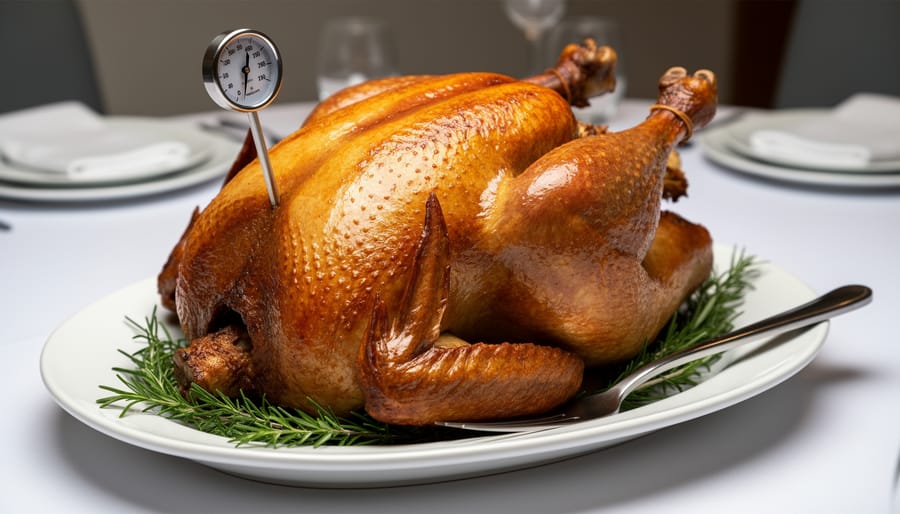
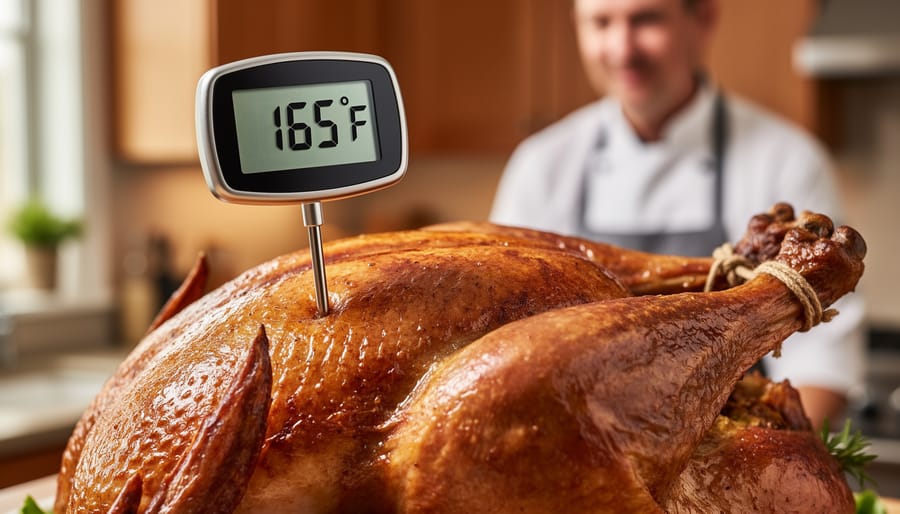
Start checking temperature 30 minutes before the low end of the range. Corporate events cannot afford guesswork, so insert an instant-read thermometer into the breast and thigh without touching bone. Once both spots hit 165°F, pull the bird and let it rest 20 minutes before carving.
How This Catering-Tested Timing Was Validated
These timing recommendations come from hundreds of turkey roasts prepared for corporate events, boardroom luncheons and business functions over multiple catering seasons. When you are serving 40 executives for a quarterly meeting or feeding 100 guests at a corporate celebration, there is no room for guesswork, every bird must finish on time, cooked through, and presentable.
Havana Lunch’s validation process differs fundamentally from home-kitchen experimentation. Commercial ovens undergo regular calibration checks, ensuring the dial temperature matches the actual chamber temperature. Professional-grade probe thermometers, tested against NIST standards, eliminate the margin of error that consumer thermometers introduce. Every turkey is weighed precisely, roasted at 350°F in standardized roasting pans, and monitored at 30-minute intervals until the thigh reaches 165°F.
The timing data in this guide reflects consistent patterns observed across weight ranges from 10 to 24 pounds. A 14-pound unstuffed bird, for example, reliably finishes in 3 hours and 10 minutes when started cold from refrigeration. A 20-pound stuffed turkey consistently requires 5 hours and 40 minutes under identical conditions. These are not manufacturer estimates or USDA maximums, they are the actual cook times logged in a professional catering environment where failure means disappointing a client and damaging a reputation.
Home cooks work with a single oven that may run 25 degrees hot or cold, a drugstore thermometer with questionable accuracy, and the luxury of serving whenever the bird finishes. Catering demands precision because service time is fixed, the oven performance is known, and the stakes involve professional accountability rather than a forgiving dinner table. That real-world pressure produces timing data you can actually trust.
Critical Factors That Adjust Your Turkey Roast Timeline
Stuffed vs. Unstuffed: The 30-Minute Question
Stuffed birds require longer roasting because the cavity filling acts as insulation, slowing heat transfer to the thickest part of the breast and thighs. Add 15-30 minutes per pound when stuffing a turkey, and expect the total cook time to increase by 30 to 45 minutes compared to an unstuffed bird of the same weight. The real concern isn’t just duration, it’s food safety. Stuffing inside the cavity must reach 165°F to kill bacteria, and by the time the center of the stuffing hits that mark, the breast meat often dries out.
For corporate events and boardroom lunches, we recommend cooking stuffing separately in a casserole dish. It finishes faster, stays moist, and eliminates the guesswork of dual-target temperatures. You also avoid the risk of serving undercooked stuffing to a room full of business professionals. If a client insists on traditional stuffed presentation, we factor in the extra 45 minutes, use two thermometers, one in the thigh, one in the stuffing, and plan for tighter scheduling. The timing complexity rarely justifies the marginal nostalgia benefit when feeding groups.
Boardroom Lunch Timing: Working Backwards from Service
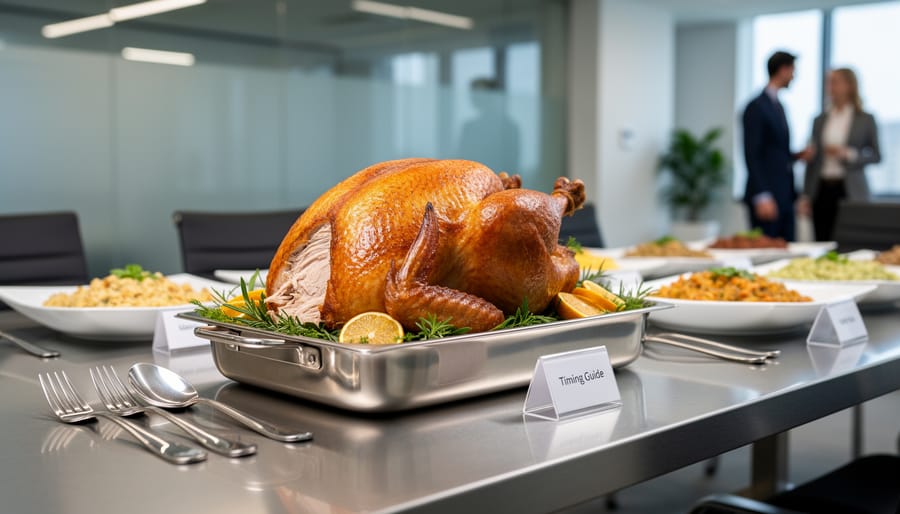
For a noon boardroom lunch, professional caterers start the clock much earlier than most event organizers expect. A 14-pound unstuffed turkey needs roughly three hours at 350°F, but you must add 30 minutes of resting time before carving and another 20-30 minutes for actual carving and plating. That puts your oven start time at 8:00 AM for a noon service, assuming the bird goes straight from refrigerator to preheated oven.
Stuffed turkeys demand even earlier prep. The same 14-pounder stuffed requires nearly four hours of roasting, pushing your start back to 7:30 AM or earlier. Factor in potential delays, ovens that run cool, a bird that was colder than expected, or last-minute thermometer checks that show you need another 15 minutes, and smart caterers build in a 30-minute buffer. Better to hold a finished turkey warm (tented loosely with foil in a 200°F oven) than to serve undercooked poultry to corporate clients.
Coordination with other menu elements matters just as much as the turkey itself. If your boardroom lunch includes sides that need oven space or last-minute finishing, you’ll need to plan Turkey out first, resting on the counter while vegetables roast. Professional catering services solve this timing puzzle by using multiple ovens and staggered schedules, which is why corporate events often benefit from outsourcing rather than attempting in-house execution.
Who It’s For
This timing guide serves corporate event planners coordinating catered turkey for business meetings boardroom lunches, and company celebrations where reliability matters more than experimentation. If you are scheduling turkey service in an executive dining room or conferencing facility the 350°F catering-tested approach eliminates guesswork and aligns with professional service standards.
Home cooks preparing turkey for Thanksgiving, Christmas, or family gatherings benefit equally. The catering methodology translates directly to residential kitchens: same temperature, same per-pound calculation, same internal temperature checkpoint. Whether you are feeding twelve relatives or forty colleagues, these timing guidelines apply.
This review is not for adventurous cooks experimenting with brine variations, smoking methods, or unconventional roasting techniques. It delivers straightforward, proven timing at 350°F for traditional oven roasting, prioritizing consistent results over culinary innovation. If you need turkey done right on schedule, this is your framework.
Common Turkey Timing Questions from Event Organizers
Event organizers face unique challenges when planning turkey service for corporate functions. Unlike home cooks who can adjust dinner timing if the bird runs late, you’re locked into a boardroom lunch schedule with attendees arriving at a set time. These questions reflect the most common timing concerns we hear from clients coordinating business events.
Can I cook turkey at 325°F instead of 350°F?
You can, but it adds about 15-20 minutes per pound to your total cook time and increases the risk of dry breast meat in larger birds. The 350°F standard exists because it delivers consistent browning while keeping white meat moist across different turkey sizes, which matters when you’re feeding a boardroom rather than experimenting at home.
How long should turkey rest before carving?
Allow 20-30 minutes of resting time after removing the turkey from the oven. This lets juices redistribute throughout the meat rather than running onto the cutting board, and gives you a buffer to set up serving stations or transport to your boardroom facilities.
What if the turkey is partially frozen when I need to start cooking?
Add 50% more time to your base calculation, but understand that partially frozen turkey cooks unevenly and poses food safety risks. For corporate events where timing precision matters, this scenario justifies calling a professional caterer rather than gambling on uneven results.
Should I tent the turkey with foil during roasting?
Tent loosely with foil only if the breast is browning too quickly, typically in the final hour of cooking. Starting with foil on steams the skin rather than crisping it, and constantly removing foil to check doneness releases oven heat that extends your timeline.
How do I keep turkey warm during transport to an off-site boardroom?
Wrap the fully-rested turkey tightly in heavy-duty foil, then layer with clean towels in an insulated carrier. Turkey holds safe serving temperature for about 90 minutes this way, though professional catering services use commercial hot boxes that maintain proper temperature for several hours without drying out the meat.
Does convection roasting change the timing significantly?
Convection typically reduces cooking time by about 25% and often requires dropping the temperature to 325°F to prevent over-browning. If you’re using convection for a corporate event, test your specific oven beforehand rather than discovering timing differences when guests are waiting.
The temperature question comes up constantly because online sources conflict. Some recommend 325°F for “low and slow” cooking, others suggest 375°F for faster service. The catering industry settled on 350°F decades ago because it’s the Goldilocks zone: hot enough to develop color and crisp skin, gentle enough to cook a 20-pound bird evenly without torching the outside while the interior lags behind.
Resting time isn’t optional filler in your schedule. That 20-30 minute window after roasting is when the turkey finishes cooking from residual heat and becomes carvable rather than a juice-spilling mess. Build it into your backward timeline from service, and you’ll plate much cleaner portions.
The partially frozen scenario happens more often in corporate settings than you’d expect. Someone picks up the turkey the morning of the event rather than thawing it properly for three days. The 50% time addition is a rough guideline, but internal temperature becomes completely unpredictable. You might hit 165°F in the breast while the thigh sits at 140°F, creating both food safety problems and texture issues.
The reliable answer for turkey roast cooking time remains consistent: 13-15 minutes per pound for unstuffed birds at 350°F, or 15-17 minutes per pound when stuffed. Your thermometer reading 165°F in the thickest part of the thigh is the non-negotiable finish line, regardless of what the clock says. This timing framework eliminates guesswork and delivers predictable results whether you’re roasting a 12-pound bird for a family gathering or coordinating multiple turkeys for a corporate function.
At Havana Lunch, we apply this exact methodology to every catered turkey order for business events and boardroom facilities. Professional catering timing accounts for variables home cooks often miss: oven calibration, proper resting protocols, and coordinating service windows with other menu items. When your event timeline can’t absorb mistakes, a noon presentation lunch, a client appreciation dinner, or a quarterly boardroom meeting, professional preparation removes the risk.
For organizers who need flawless execution without managing the kitchen logistics themselves, partnering with experienced caterers ensures your turkey arrives perfectly cooked, properly rested, and ready to serve exactly when your agenda demands it.