
Cash on delivery is back. If you prefer to pay for your meal when it arrives rather than entering card details online, several major food delivery platforms now accommodate you, including Uber Eats, which introduced cash payments across Canada as of July 1, 2026. This payment option joins DoorDash, Grubhub, and other services that have maintained or recently added cash as a checkout method.
The shift reflects persistent demand from customers who value the immediacy of cash transactions, whether for budget control, privacy, or simply avoiding digital payment hassles. For business professionals ordering lunch for meetings or corporate events, cash payment can simplify expense tracking and eliminate concerns about corporate card approvals or reimbursement delays.
When you choose cash on delivery, you’ll typically see which restaurants and delivery services accept the option during checkout. The process is straightforward: place your order through the app or website, select cash as your payment method, and have the exact amount or sufficient bills ready when your food arrives. Some platforms require you to confirm the payment method in your account settings first, while others display it automatically for participating merchants.
Beyond third-party apps, ordering directly from local restaurants often provides the most reliable cash payment experience. Many lunch spots and catering services maintain traditional payment flexibility, particularly for larger boardroom orders or regular corporate accounts. This article walks you through which delivery platforms accept cash in 2026, how to set up and use this payment option, and what to expect when your order arrives at your door or office.
Why Cash Payment Matters for Food Delivery
Cash payment options in food delivery serve practical needs that digital-only systems simply can’t address. While card and app-based payments dominate the industry, a significant portion of customers actively seek restaurants and platforms that accept physical currency at the door.
Privacy stands as a primary driver for cash preference. Some customers don’t want every lunch order tracked in their digital spending history, particularly when ordering for personal meals during work hours. Cash transactions leave no data trail, no marketing cookies, and no algorithms analyzing your dining patterns.
Financial access creates another compelling reason. Not everyone has access to credit cards or maintains sufficient bank balances for digital payments. Young professionals just starting their careers, international workers establishing themselves locally, or individuals rebuilding their credit all benefit when delivery services accommodate cash. This inclusivity extends the reach of food delivery beyond the traditionally banked population.
Budget control becomes tangible with physical currency. When you hand over cash, you immediately feel the transaction in a way that swiping a card doesn’t replicate. This psychological difference helps diners stick to lunch budgets and avoid the overspending that comes with frictionless digital payments.
For business contexts, cash flexibility offers distinct advantages:
- Corporate teams can split lunch costs without complicated app transfers or shared cards
- Event organizers managing boardroom catering can handle payments without processing company cards through personal accounts
- Petty cash systems integrate seamlessly with cash-on-delivery options for team meals
- Visiting clients or international colleagues without local banking can still participate in group orders
The return of cash payment options in 2026 acknowledges these real-world scenarios. Payment flexibility isn’t just convenient, it’s essential for serving diverse customer needs, from quick individual lunches to coordinated corporate catering where traditional payment methods still hold value.
How Cash on Delivery Works with Major Platforms
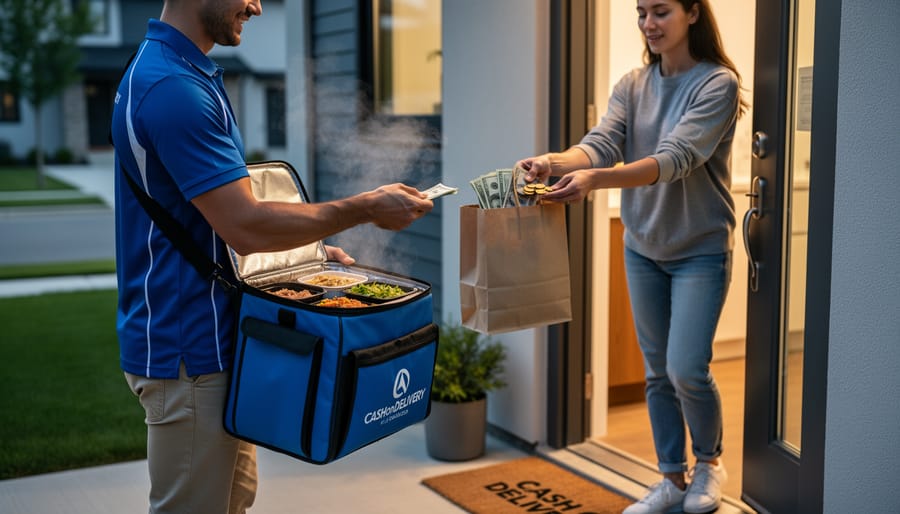
When you choose cash as your payment option on a major delivery platform, the process is straightforward but differs from the digital checkout you might be used to. Uber Eats introduced Cash on Delivery in Canada effective July 1, 2026, marking a significant shift for customers who prefer or need this payment method.
To place an order with cash payment, you start by browsing restaurants on the platform as usual. You can search by cuisine type, restaurant name, specific dish, or meal category to find what you’re looking for. Once you’ve added items to your cart and proceed to checkout, you’ll see Cash on Delivery as a payment option alongside credit cards and digital wallets.
Select cash, confirm your order, and the restaurant will prepare your food just as they would for any other order. The delivery person picks up your meal and heads to your address. Here’s where the process diverges from card payments: when the driver arrives, you hand them the exact amount or enough cash to cover your order total, including any delivery fees and tip you want to provide.
Having the right amount ready speeds things up considerably. While drivers can provide change, rounding up to a convenient amount benefits everyone involved. The platform displays your total before you confirm, so you know precisely what to prepare.
For corporate lunch orders or business meetings, cash payment can simplify expense tracking when multiple team members chip in or when reimbursement policies favor cash receipts. You can even schedule orders in advance for later delivery, paying cash when the food arrives at your boardroom or office.
One practical note: not every restaurant on Uber Eats necessarily accepts cash orders, so availability depends on the specific establishment’s participation in the Cash on Delivery program. The platform indicates which payment methods each restaurant accepts before you finalize your order, preventing any last-minute surprises.
Food Delivery Platforms Supporting Cash Payments
The food delivery landscape for cash payments has evolved considerably, with several major platforms now offering this traditional payment method alongside digital options. Here’s what you need to know about the services that accommodate cash transactions.
| Platform | Cash Payment | Key Features |
|---|---|---|
| Uber Eats | Yes (as of July 1, 2026) | Scheduled orders, pickup option, subscriber discounts |
| DoorDash | Select markets | Local restaurant delivery |
| Grubhub | Varies by location | Cuisine-based search across categories |
Uber Eats introduced Cash on Delivery in Canada effective July 1, 2026, through an updated Pricing Addendum. This represents the most significant recent change in payment options among major platforms. The service lets you search restaurants by cuisine, name, or specific dish, and you can choose to schedule orders in advance for later pickup by a delivery person. Subscribers receive $0 delivery fees and up to 10% off orders over $15 at participating non-grocery locations, or 5% off orders over $35 at participating grocery stores. The platform also offers pickup as an alternative to delivery, giving you flexibility in how you receive your order.
DoorDash provides delivery from local restaurants and does accommodate cash payments in select markets. Availability depends on your location and participating restaurants in your area. Similarly, Grubhub lists restaurants by cuisine categories including American, Asian, Breakfast, and Chicken options, though cash payment acceptance varies by region.
When these platforms don’t offer the flexibility you need, many local restaurants accept cash for direct orders. This approach works well not just for individual meals but also for corporate lunch orders and even meal kits. Direct ordering typically bypasses platform fees while supporting businesses in your community, making it an attractive option for both personal and professional dining needs.
Direct Restaurant Ordering: The Local Advantage
Ordering directly from local restaurants offers distinct advantages that go beyond simple payment flexibility. When you call or visit a restaurant to place your cash order, you eliminate the commission fees that delivery platforms typically charge, often 15-30% of your order total. That savings can translate to better prices, larger portions, or the goodwill that comes from supporting a business directly.
Cash transactions with neighborhood establishments also build relationships that matter for regular orders. Business teams ordering lunch for boardroom meetings benefit from this familiarity: restaurants learn your preferences, accommodate special requests more readily, and prioritize your orders during busy periods. For corporate clients coordinating recurring catering needs, having a direct contact who knows your office’s dietary requirements and delivery schedule streamlines the entire process.
Many local restaurants maintain flexible payment options precisely because they value their community customers. Establishments serving busy professionals often accept cash alongside other payment methods, understanding that different situations call for different approaches. A team lunch might come from petty cash, while an individual order uses a credit card.
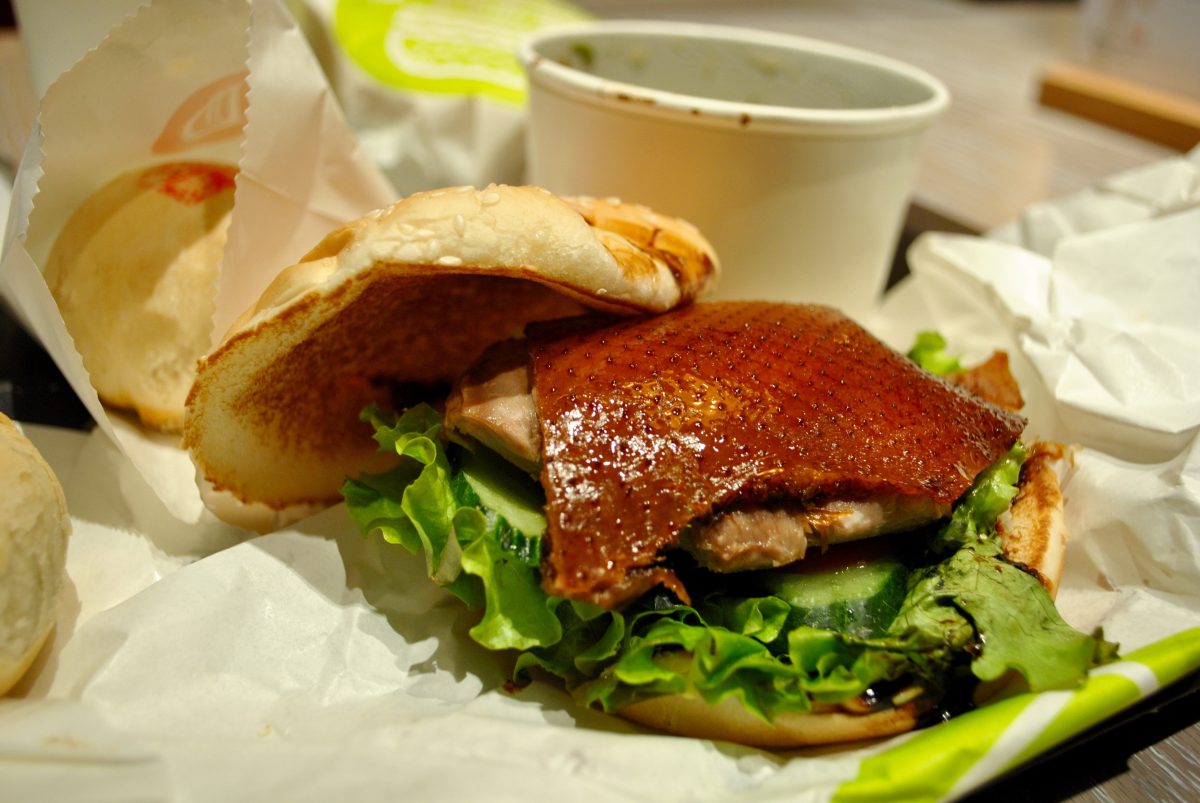
The menu variety at locally-focused restaurants can surprise customers accustomed to platform-filtered selections. Calling directly reveals the full range of offerings, including daily specials and seasonal items that might not appear online. You might discover a signature duck burger or other specialty dish that becomes your go-to order.
For businesses planning catering orders, direct restaurant relationships prove invaluable. You can discuss serving sizes, timing, setup requirements, and payment arrangements in detail, conversations that are difficult through a platform interface. Cash payment becomes just one element of a broader, more personalized service relationship.
Making Cash Payments Work for Business Lunches
Coordinating cash payments for team lunches and catering requires more planning than digital transactions, but the extra effort pays off in payment flexibility and budget control. Start by calling restaurants directly a day or two in advance to confirm they accept cash for delivery and to verify the final order total, including delivery fees and gratuities. This advance confirmation prevents awkward surprises when your driver arrives at the office.
For recurring corporate lunch orders, establish a relationship with one or two local restaurants that reliably accept cash and deliver on schedule. Designate someone on your team to handle the cash transaction and collect receipts for expense tracking. Many restaurants provide itemized receipts showing the payment method, which satisfies most corporate accounting requirements. When ordering for boardroom meetings with specific timing needs, schedule deliveries at least 15 minutes before your meeting starts to account for minor delays and setup time. Consider keeping a petty cash envelope specifically for lunch orders to streamline the process and maintain clear records of business dining expenses throughout the month.
The return of cash payment options in 2026 marks a significant shift in food delivery accessibility. With platforms like Uber Eats introducing Cash on Delivery and restaurants maintaining direct ordering flexibility, customers now have genuine choice in how they pay. Whether you’re a business professional coordinating corporate lunches, an event organizer managing catering expenses, or simply someone who prefers cash transactions, these options serve real needs. Privacy-conscious diners, budget managers, and those without credit cards all benefit from this payment flexibility. For the best selection and service, consider exploring both major delivery platforms and local restaurants that welcome cash payments. Direct restaurant ordering often means better prices, personalized service, and direct support for neighborhood businesses, while platform delivery offers convenience and variety. Cash-friendly food delivery isn’t just about payment method, it’s about creating inclusive, accessible dining experiences that work for everyone.