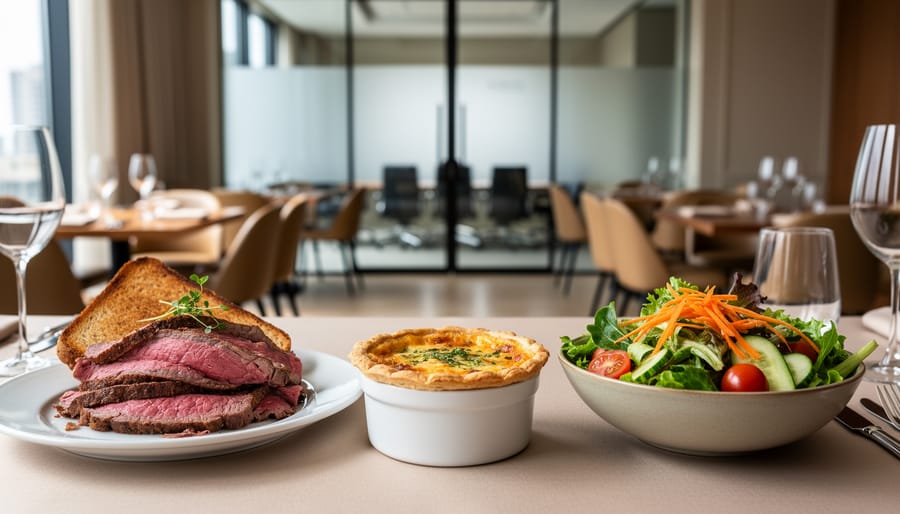

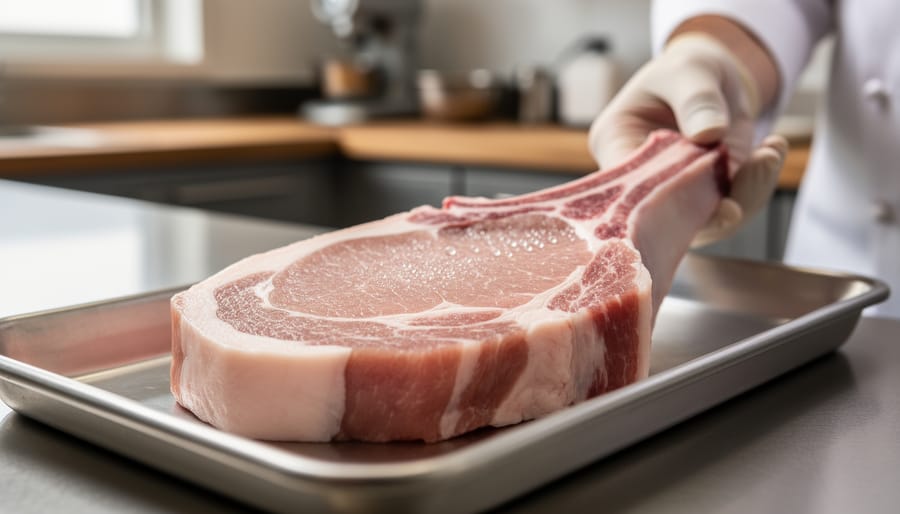
Quality pork starts with the animal’s diet, humane raising practices, and proper marbling. When you’re selecting dishes for your next business lunch or corporate event, look for meat that’s pale pink to deep rose in color, firm to the touch, and carries visible intracellular fat that ensures both flavor and moisture during cooking. Ontario producers have earned recognition for these standards, raising heritage and commercial breeds on balanced feeds that develop the protein structure and fat content professional chefs require.
The difference shows up on the plate. Premium cuts deliver consistent tenderness, a subtle sweetness, and none of the dryness or bland flavor that comes from industrial shortcuts. For boardroom dining and catered events, this quality translates directly to guest satisfaction and reflects well on your planning.
Understanding what separates exceptional pork from mediocre options helps you make informed choices whether you’re ordering lunch for your team or planning a multi-course meal for clients. The Ontario market offers access to farms and kitchens committed to transparency about sourcing, aging, and preparation methods. Knowing which preparation techniques preserve quality and which restaurants maintain high standards gives you confidence in every order you place.
What Defines Quality Pork
Visual and Textural Indicators
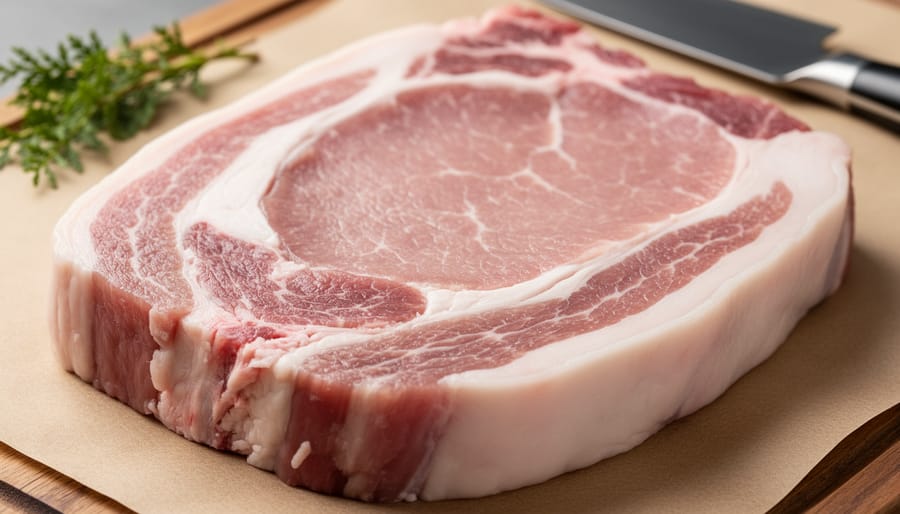
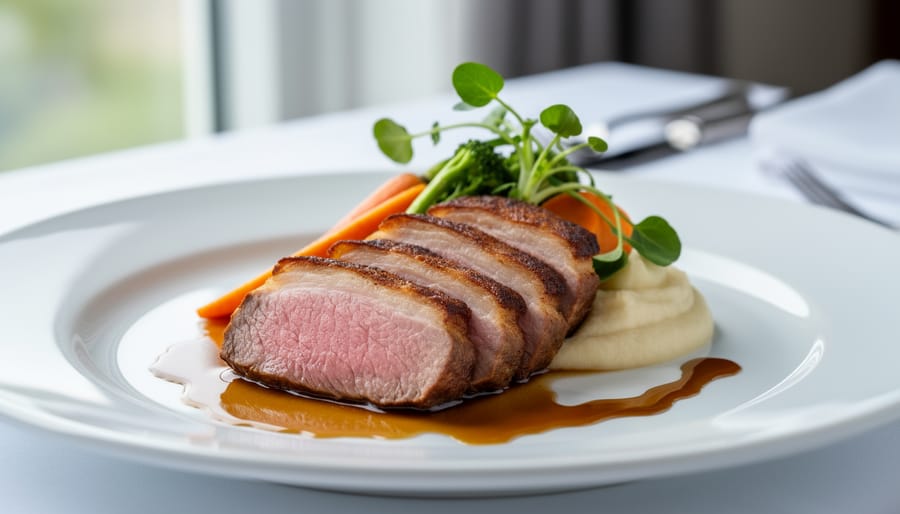
Quality pork reveals itself through distinct visual and physical cues that you can spot even when ordering from a menu with an accompanying photo or viewing a plated dish. Look for meat with a rosy-pink to light red hue, pale, washed-out coloring often signals stress during processing, while deep crimson suggests age. The surface should appear slightly moist but never wet or sticky.
Marbling matters more than many diners realize. Fine threads of white fat distributed throughout the muscle enhance flavor and tenderness during cooking. Modern pork is leaner than decades past, but the best cuts still show delicate fat striations rather than large clumps or none at all. When possible to observe raw cuts or discuss preparation with knowledgeable staff, firmness provides another clue: quality pork springs back when pressed lightly, maintaining structure without feeling mushy or overly soft.
Fat distribution along the edges should be creamy white, not yellow or gray. These muscle quality indicators translate directly to what arrives on your plate, well-marbled chops stay juicy through grilling, while properly-aged loin presents clean flavor without off-notes. Establishments serious about pork quality will showcase these characteristics in their presentations, whether you’re ordering a lunch sandwich or selecting a catering menu for your next boardroom event.
Sourcing and Production Standards
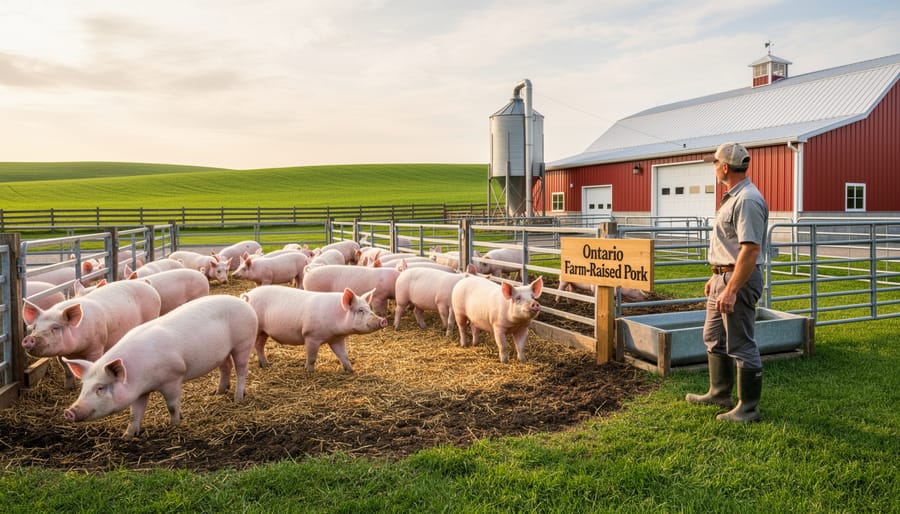
Ontario’s pork producers follow strict provincial and national standards that set the bar for quality. The Canadian Pork Excellence program oversees farm practices, ensuring animals receive proper nutrition, housing, and care throughout their lives. These standards translate directly to better meat: pigs raised in low-stress environments with access to natural movement produce more tender, flavorful pork with consistent marbling.
Farm-to-table relationships matter more than buzzwords suggest. When restaurants source from Ontario farms within a 100-kilometer radius, they typically receive pork within 48 hours of processing, preserving moisture and natural enzymes that break down during extended transport. Look for menus that name their suppliers or specify “Ontario-raised” rather than vague “locally-sourced” claims.
Certification transparency reveals commitment. The Canadian Quality Assurance (CQA) program verifies on-farm food safety and animal care practices through independent audits. Restaurants serious about quality often display supplier relationships on their websites or readily answer questions about sourcing when asked. If a server can tell you which farm provided today’s pork chop, you’re likely in good hands.
Humane raising practices also affect taste. Pigs given outdoor access and proper space develop better muscle structure, resulting in firmer texture and richer flavor compared to factory-farmed alternatives.
Ontario Pork Quality Dishes Worth Ordering
Classic Lunch Menu Pork Options
Ontario lunch menus featuring quality pork balance flavor, presentation, and service speed, essential for business professionals dining between meetings. The most reliable indicators of a restaurant’s commitment to quality appear in their everyday offerings.
Pork schnitzel remains a lunchtime favorite: a properly prepared cutlet should be golden, tender when cut, and never greasy. The breading crisps without overwhelming the meat, revealing moist pork underneath. Many establishments serve this with seasonal salads or potato sides that complement rather than compete.
Cuban-style roasted pork sandwiches demonstrate how simple preparations showcase quality ingredients. Slow-roasted shoulder, thinly sliced and layered with minimal but precise accompaniments, lets the pork’s natural flavor and texture take center stage. These sandwiches work particularly well for quick service without sacrificing sophistication.
Grilled pork chops on lunch menus signal a kitchen confident in its sourcing. A quality chop needs little embellishment, proper searing, accurate cooking temperature, and perhaps a light sauce or chutney. The meat should be slightly pink at the bone, juicy throughout, and easy to cut with a standard knife.
Specialty preparations like pork tenderloin medallions or pulled pork plates appear on lunch menu highlights at establishments prioritizing both quality and efficiency. These dishes prove that business lunch settings can deliver restaurant-quality pork without extended wait times, making them ideal for corporate dining and repeat professional clientele.
Catering-Worthy Pork Presentations
When hosting corporate events, quality pork presentations elevate the experience beyond standard catering fare. Carved pork loin stations allow guests to select preferred cuts while maintaining an elegant atmosphere ideal for professional settings. The visual impact of a properly roasted loin, glistening exterior, perfectly pink interior, signals attention to detail that reflects well on the host organization.
Pulled pork builds work exceptionally well for informal networking events and team gatherings. Quality Ontario pork shoulder, slow-cooked for eight to twelve hours, delivers the tenderness and flavor depth that distinguishes memorable catering from forgettable buffet lines. Offering choice of housemade sauces and artisan rolls transforms this casual favorite into an upscale option.
For boardroom meetings requiring plated service, pork medallions provide portion control and refined presentation. Restaurants specializing in private dining typically pair these with seasonal vegetables and potato preparations that complement rather than overwhelm the pork’s natural flavor. The medallion format allows consistent cooking across multiple servings, ensuring every attendee receives properly executed, restaurant-quality pork.
Glazed pork belly appetizers offer a sophisticated starter for cocktail receptions. When sourced from quality Ontario suppliers and prepared with balanced sweet-savory glazes, these small plates demonstrate culinary expertise while accommodating stand-up service formats. The key is precise portioning, each piece should deliver the characteristic tender meat with crisp, caramelized fat that defines properly prepared pork belly.
How Restaurants Prepare Quality Pork Properly
Proper preparation separates forgettable pork from exceptional dining experiences. Restaurants committed to quality follow precise techniques that respect the meat’s natural characteristics while maximizing flavor and tenderness.
Temperature management forms the foundation of excellent pork cookery. Quality-focused kitchens remove pork from refrigeration 20-30 minutes before cooking, allowing even heat penetration. They cook most cuts to an internal temperature of 145°F (63°C), followed by a three-minute rest, modern standards that preserve moisture while ensuring safety. Overcooking remains pork’s greatest enemy; skilled kitchens use probe thermometers rather than guesswork, pulling chops and roasts just before they reach target temperature since carryover heat continues cooking during rest.
Seasoning approaches vary by preparation method, but quality establishments share common practices. They salt pork generously in advance when possible, allowing time for the seasoning to penetrate beyond the surface. For quick-service lunch items, they apply salt immediately before cooking and adjust seasoning afterward. Complementary flavors, garlic, herbs, citrus, mild spices, enhance rather than mask the pork’s natural taste.
The preparation process quality-focused kitchens follow ensures optimal results:
- Trim excess fat while preserving marbling and a thin protective layer
- Bring meat to room temperature for even cooking
- Season appropriately for the cooking method and timing
- Sear or brown surfaces to develop flavor complexity
- Cook to precise internal temperature using reliable thermometers
- Rest the meat adequately before slicing or serving
Resting proves critical yet often rushed. Properly prepared pork rests on a warm plate, loosely tented, allowing juices to redistribute throughout the meat. Cut a chop too soon and those flavorful juices run onto the plate instead of staying where they belong.
Cooking methods themselves matter. Establishments serving quality pork match technique to cut: quick high-heat grilling for tender chops, low-and-slow roasting for shoulders, controlled braising for tougher portions. They don’t force every cut through the same process.
Choosing Restaurants That Prioritize Pork Quality
Spotting restaurants committed to quality pork starts with their willingness to share details about sourcing. Check menus and websites for mentions of specific farms, Ontario suppliers, or partnerships with local producers. Establishments that name their sources demonstrate transparency and pride in their ingredients, vague descriptions like “premium pork” without attribution often signal lower commitment to quality.
Menu language offers telling clues. Look for preparations that respect the protein: slow-roasted, dry-aged, heritage breed, pasture-raised. Restaurants confident in their pork quality build dishes around the meat itself rather than masking it with heavy sauces or excessive seasoning. Seasonal menu rotations also suggest chefs who work directly with suppliers and adjust offerings based on availability and quality.
When booking catering or reserving an executive dining room for business events, ask direct questions. Which farms supply your pork? How do you ensure freshness? Can you accommodate specific cuts or preparations? Responsive, detailed answers indicate staff trained to understand and communicate quality standards. Vague or dismissive responses suggest the opposite.
Physical indicators matter too. Visit during service hours and observe the kitchen if possible. Clean, organized operations with visible quality control reflect overall standards. Staff knowledge makes a difference, servers who can discuss cooking methods, sourcing regions, and preparation details work for establishments that prioritize training and transparency.
Online reviews mentioning consistent quality, specific dishes, and attentive service help validate a restaurant’s commitment. Pay attention to comments about freshness, flavor, and whether the kitchen accommodates special requests. Restaurants that maintain high standards earn repeat business customers and detailed praise, not just generic compliments.
Common Questions About Quality Pork in Ontario
How can I tell if a restaurant sources quality pork?
Check the menu for specific sourcing details like “Ontario-raised,” farm names, or quality certifications. Restaurants committed to quality usually highlight their suppliers and willingly answer questions about where their pork comes from.
Is pink pork safe to eat?
Yes, properly cooked pork can have a slight pink tint and still be safe. Modern pork is safe at 145°F internal temperature, which often results in a faintly pink, juicier center rather than the grey, dried-out texture older cooking guidelines produced.
Why does quality pork cost more at some restaurants?
Premium sourcing, humane raising practices, and proper aging all increase costs. Restaurants using Ontario farm-raised pork with traceable supply chains invest more upfront, which translates to better flavor, texture, and ethical standards on your plate.
What pork dishes work best for business catering?
Slow-roasted pork loin, pulled pork with quality toppings, and plated pork chops suit professional settings well. These preparations hold temperature during service, offer easy portion control, and deliver impressive presentation without complicated plating.
When ordering for busy professionals or corporate events, don’t hesitate to ask your server or caterer about preparation methods and timing. Quality establishments welcome these questions and can adjust cooking techniques or cuts to match your group’s preferences and schedule constraints.
Choosing quality pork transforms an ordinary meal into a memorable experience, whether you’re hosting a critical client lunch, planning a corporate catering event, or simply enjoying a well-deserved break from the workday. The difference between standard and exceptional pork is immediately noticeable, in flavor, texture, and overall satisfaction. Establishments that prioritize sourcing, proper preparation, and transparent practices aren’t just serving better food; they’re demonstrating respect for their customers and commitment to excellence. When you select restaurants and caterers who take pork quality seriously, you’re investing in dining experiences that reflect professionalism and attention to detail. Look for venues that showcase Ontario’s outstanding pork through thoughtful menus, knowledgeable staff, and consistent execution. Your choice matters, and quality always delivers.