
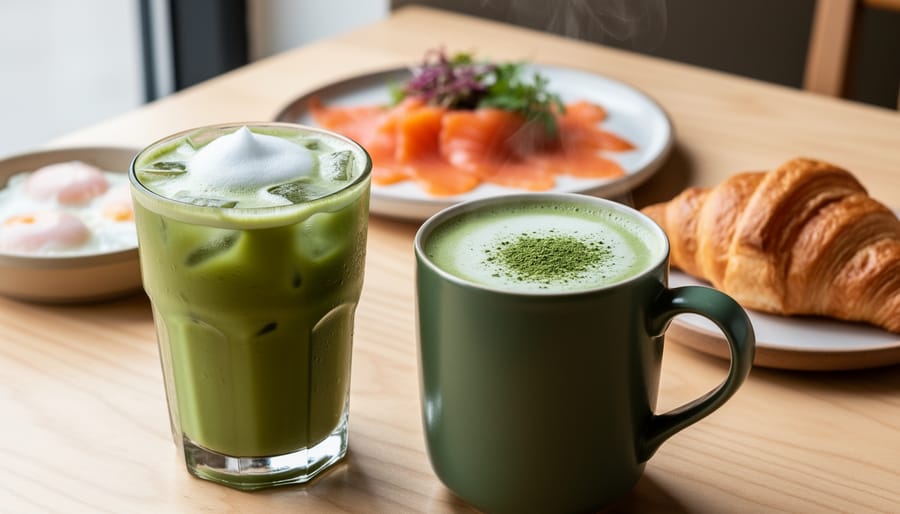
A compelling Canadian brunch matcha drink menu features eight signature beverages that blend Japanese tradition with local breakfast culture: classic matcha lattes, iced variations, and creative fusions incorporating maple, berries, and oats. Restaurant owners and menu planners at Matcha Mornings and similar establishments adding these drinks in 2026 will meet surging demand from health-conscious diners who want the energy boost of matcha without sacrificing the indulgent weekend brunch experience. Strategic matcha offerings drive both beverage sales and overall ticket averages, particularly when paired with crowd-pleasing brunch staples like eggs Benedict and smoked salmon plates.
The right matcha drink selection balances familiar comfort with adventurous flavor profiles. Canadian customers respond especially well to locally-inspired touches: think Grade A maple syrup instead of simple syrup, Ontario dairy or oat milk bases, and prairie-sourced honey. Each drink on your menu should serve a clear purpose, whether that’s offering a gentler caffeine alternative to espresso, providing plant-based options for vegan guests, or creating Instagram-worthy presentations that generate organic social media buzz. Temperature variety matters too. Summer brunch crowds lean toward cold foam matcha drinks and granitas, while autumn and winter guests gravitate toward steaming ceremonial-grade lattes served in ceramic mugs.
Why We Selected These Matcha Drinks
We chose these eight matcha drinks based on what works in a real-world brunch setting, not just what sounds appealing on paper. Each beverage earned its spot by meeting specific operational and customer-focused standards that matter when you’re serving business professionals alongside weekend brunch enthusiasts.
The selection criteria included:
- Speed and consistency of preparation during peak service hours
- Ingredient availability and shelf stability in Canadian markets
- Visual appeal that photographs well for social media and marketing
- Flavor compatibility with savory brunch staples and sweet items alike
- Broad demographic appeal, from matcha novices to tea connoisseurs
- Scalability for both individual orders and corporate catering batches
We prioritized drinks that balance novelty with familiarity. A beverage might score high on uniqueness, but if it requires specialized equipment or lengthy prep time when you’re already managing a full brunch rush, it won’t serve your operation well. Similarly, we favored options that complement rather than compete with your existing offerings, ensuring these matcha additions enhance the overall dining experience without overwhelming your kitchen workflow or confusing your customers.
1. Classic Matcha Latte, The Crowd-Pleasing Foundation
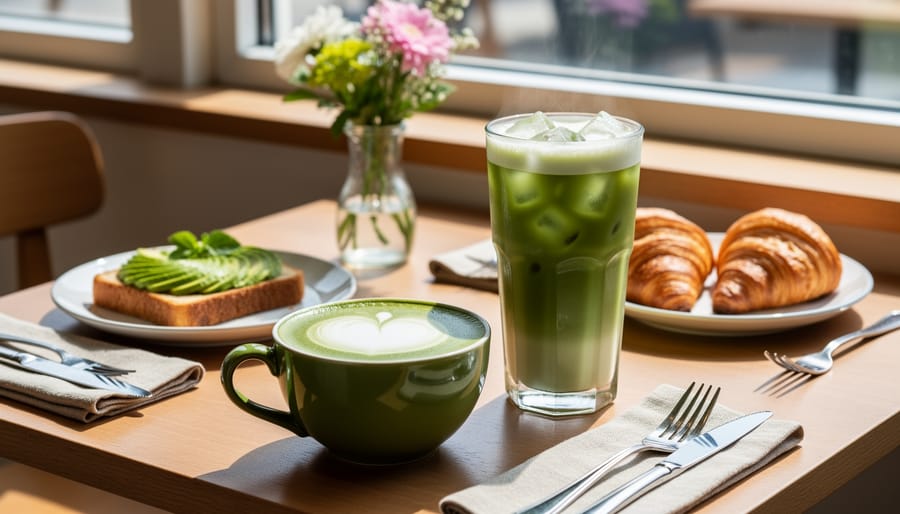
The classic matcha latte stands as your safest bet when introducing matcha to a brunch menu. This straightforward combination of whisked matcha powder, steamed milk, and optional sweetener delivers consistent results that won’t intimidate customers unfamiliar with green tea beverages.
Milk selection matters more than you’d think. Whole dairy milk creates the richest, creamiest texture that masks matcha’s natural grassiness, ideal for hesitant first-timers. Oat milk has gained serious traction in Canadian markets, offering natural sweetness and a silky mouthfeel that complements matcha’s earthy notes without overwhelming them. Almond milk works well for lighter preferences, though it can separate if your staff doesn’t steam it properly.
Sweetness customization keeps everyone happy. Train your team to ask customers about sugar levels upfront. A light touch of honey or agave preserves matcha’s character while taking the edge off for newcomers. Business professionals ordering during morning meetings typically prefer less sweetness than weekend brunch crowds.
This drink pairs exceptionally well with egg-based dishes and pastries. The slight bitterness cuts through rich hollandaise sauce and balances sweet French toast. Serve it hot during winter months or over ice when temperatures climb. The versatility alone justifies making it your menu anchor before experimenting with creative variations.
2. Maple Matcha Latte, A Canadian Twist
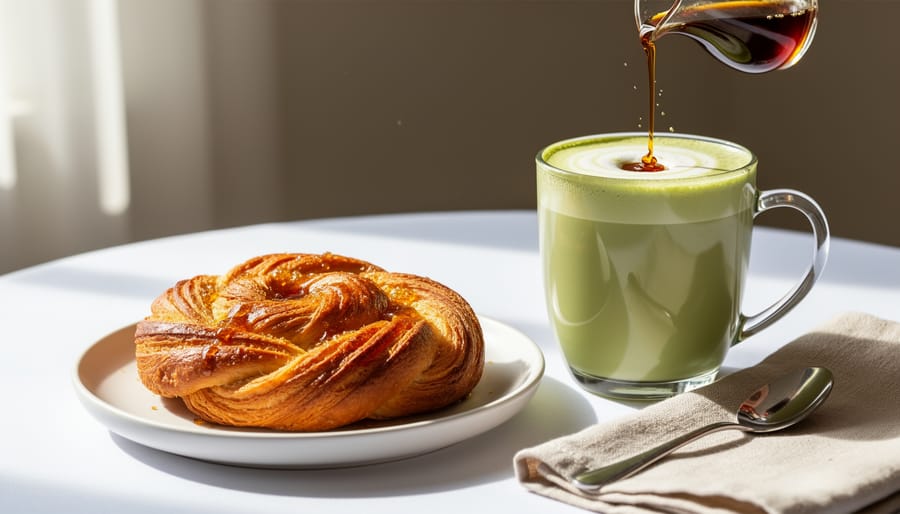
The maple matcha latte transforms traditional Japanese tea culture into a distinctly Canadian experience. This variation combines ceremonial-grade matcha powder with authentic maple syrup, creating a natural sweetness that eliminates the need for refined sugar while delivering a flavor profile customers instantly recognize.
Start with one teaspoon of premium matcha whisked with two ounces of hot water until smooth and frothy. Steam eight ounces of whole milk or oat milk to 150°F, then add one tablespoon of pure Grade A amber maple syrup. The key is using real maple syrup, not pancake syrup or artificial flavoring. The genuine article brings depth and complexity that cheap substitutes can’t match.
This drink works exceptionally well as a brunch pairing with savory items because the maple sweetness creates contrast without overwhelming the palate. Business professionals ordering lunch appreciate the refined presentation, while tourists view it as an authentic Canadian specialty worth photographing.
For catering menus, prepare a concentrated maple matcha base ahead of service. Mix equal parts whisked matcha and maple syrup, then dilute with steamed milk to order. This approach maintains quality during high-volume events while reducing preparation time per drink. The result is a signature beverage that positions your restaurant as both innovative and rooted in local tradition.
3. Matcha Smoothie Bowl Beverage, The Instagram-Ready Option
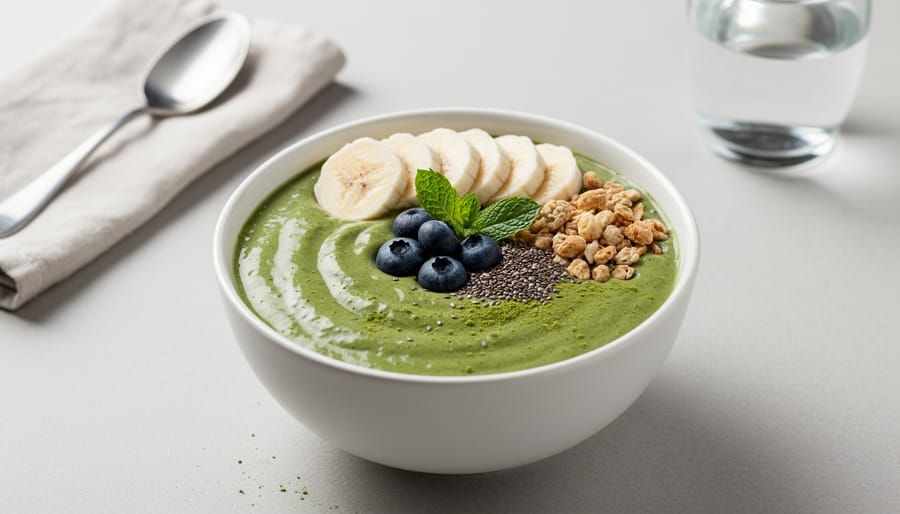
The matcha smoothie bowl beverage transforms Instagram aesthetics into a functional menu item that busy professionals actually want to drink. This blended option combines 1 teaspoon of matcha powder with frozen banana, a handful of fresh spinach, vanilla protein powder, and your choice of almond or oat milk for a creamy consistency. The result is a vibrant green beverage that photographs beautifully while providing sustained energy through a lunch meeting.
What sets this drink apart is its dual nature. Serve it in a clear glass to showcase the emerald color, or pour it into a bowl and top with sliced kiwi, granola, and hemp seeds for customers who want something between a drink and a light meal. This flexibility makes it particularly valuable for corporate catering orders where attendees have varying appetites.
The spinach adds nutrients without affecting the sweet, earthy flavor profile, while the banana provides natural sweetness and thickness. Protein powder transforms this from a simple beverage into something that holds attention through afternoon presentations. For maximum visual impact, layer the ingredients before blending completely, creating subtle color gradations that catch attention both in-person and online.
This drink typically commands a premium price point, and customers readily accept the markup because they perceive genuine value in the presentation and nutritional density.
4. Iced Matcha Mint Refresher, Summer Brunch Essential
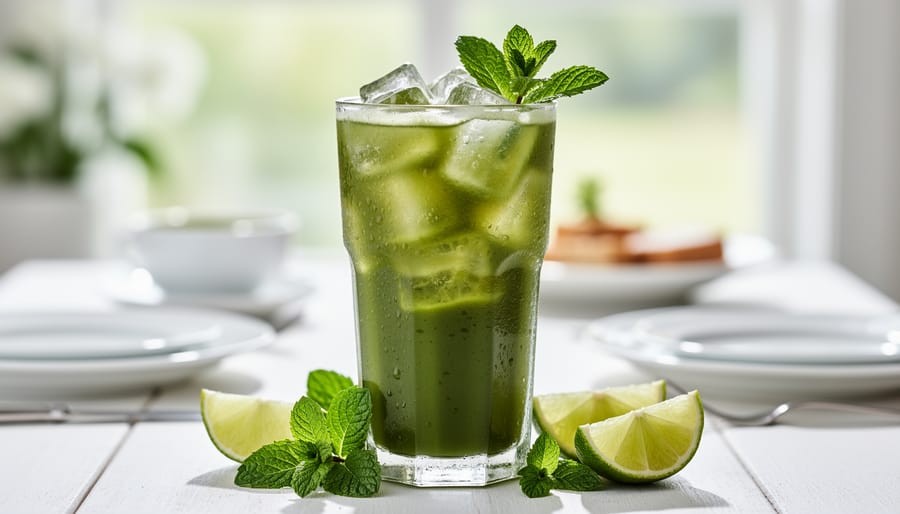
The Iced Matcha Mint Refresher delivers a cooling, palate-cleansing experience that transforms warm-weather brunch service. This vibrant green beverage combines whisked matcha with muddled fresh mint leaves, a squeeze of lime juice, and cold water or coconut water over ice. The mint provides an herbaceous brightness that tempers matcha’s natural earthiness, while lime adds a citrus punch that awakens the taste buds.
This drink excels during patio season and outdoor corporate gatherings where guests need refreshment between heavier courses. After sampling rich items like chipotle roast beef or hollandaise-topped eggs, the minty coolness resets the palate without overwhelming it. The lime’s acidity cuts through residual fat, preparing diners for the next course.
Preparation takes under three minutes: muddle 8-10 mint leaves in the serving glass, add 1 teaspoon matcha whisked with 2 ounces hot water until frothy, fill with 8 ounces cold water, squeeze in half a lime, and top with ice. For busier services, pre-batch the matcha-mint base and assemble individual drinks to order.
Consider offering this as a complimentary welcome drink at summer corporate events to make an immediate impression. The visual appeal of floating mint leaves and pale green liquid creates an elevated presentation that photographs beautifully for social sharing.
5. Matcha Chai Fusion, Warming and Aromatic
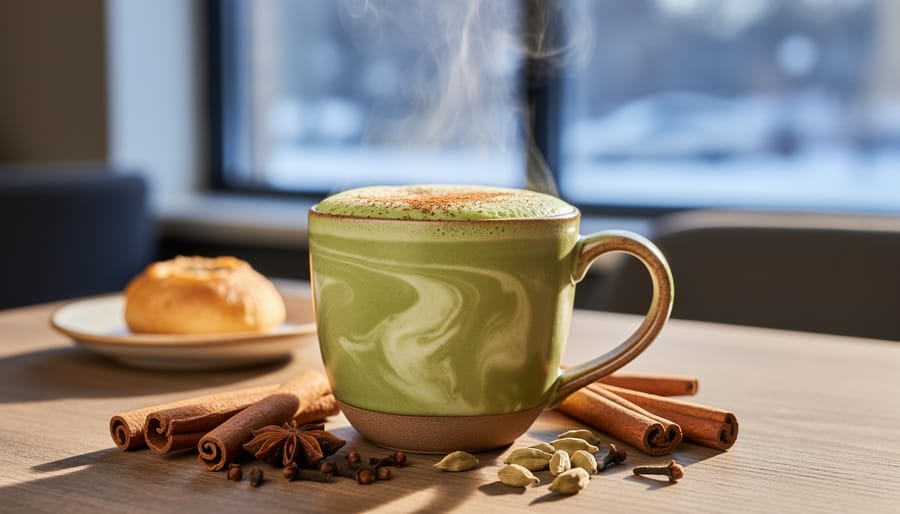
This fusion drink layers earthy matcha with warming chai spices to create a sophisticated beverage that stands apart from standard coffee service. The combination works because matcha’s grassy notes provide a subtle backdrop for cinnamon, cardamom, and ginger without overwhelming them.
Preparation involves whisking matcha powder with a small amount of hot water first, then adding steamed milk infused with chai spices. You can use pre-made chai concentrate for efficiency during busy service, or steep whole spices in milk for a more artisanal approach. The second method takes longer but delivers noticeably fresher flavor that impresses discerning clients.
This drink excels in boardroom settings during fall and winter months. The aromatic spices fill the room without being cloying, and the moderate caffeine from matcha keeps meeting attendees alert without the jitters that strong coffee sometimes causes. Business professionals appreciate the complexity, especially when paired with savory brunch items.
Serve it hot in ceramic mugs rather than paper cups to emphasize the premium experience. A light dusting of cinnamon on top adds visual appeal. Price this 15-20% higher than a standard matcha latte to reflect the additional spice components and preparation time.
6. Sparkling Matcha Lemonade, The Non-Coffee Alternative
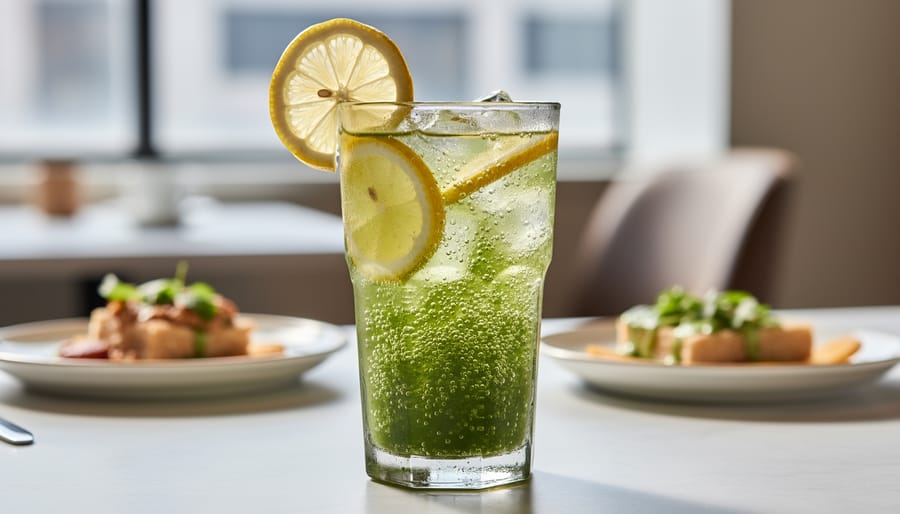
Sparkling Matcha Lemonade stands out as the ideal choice for guests who want sustained energy without the jitters or acidity of coffee. This vibrant green beverage combines whisked matcha with freshly squeezed lemon juice and quality sparkling water, creating a sophisticated drink that looks stunning in glassware and photographs beautifully for social media-conscious diners.
The effervescence adds a celebratory quality that elevates mid-morning corporate gatherings. Unlike still beverages, the carbonation creates a palate-cleansing effect between courses, making it particularly effective for private dining events where multiple dishes are served. The lemon’s brightness balances matcha’s earthy notes while providing vitamin C, and the sparkling water keeps the drink light rather than filling.
For service efficiency, pre-batch the matcha-lemon concentrate and add sparkling water to order, ensuring optimal carbonation. A 2:1 ratio of sparkling water to matcha concentrate works well, with simple syrup or agave on the side for sweetness customization. Garnish with lemon wheels and fresh mint for visual appeal. This drink typically commands premium pricing due to its ingredients and presentation while maintaining excellent profit margins.
7. Vanilla Matcha Frappé, Dessert-Inspired Indulgence
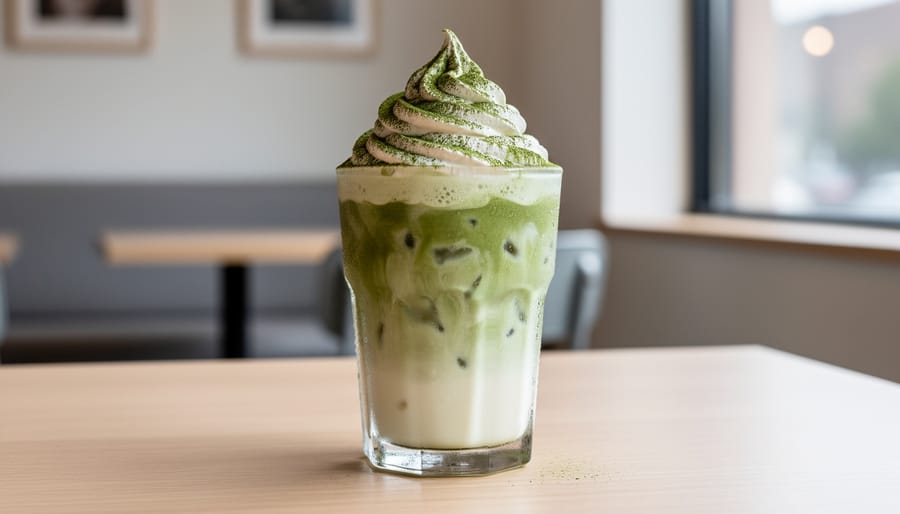
The vanilla matcha frappé transforms your brunch beverage program into something closer to a specialty dessert bar, yet it remains simple enough for quick service during busy weekend shifts. This blended drink combines ceremonial-grade matcha with vanilla extract, milk, ice, and a touch of honey or agave, creating a thick, milkshake-like consistency that customers often describe as halfway between a green tea smoothie and soft-serve ice cream.
What makes this option particularly valuable for restaurant operators is its premium price point. Because it requires more ingredients and preparation time than a simple latte, you can justify charging $8 to $11 per serving, significantly higher margins than standard coffee drinks. The dessert-like quality means it appeals strongly to afternoon brunch crowds, especially those finishing their meals around 2 or 3 PM who might otherwise skip ordering an additional beverage.
From a practical standpoint, this drink does demand kitchen equipment you likely already own: a high-powered blender and adequate freezer space for ice storage. Consider offering it as a limited-time feature initially to gauge customer response before adding it as a permanent menu fixture, and train staff to suggest it as a post-meal treat rather than an opening beverage.
8. Traditional Ceremonial Matcha, The Premium Experience
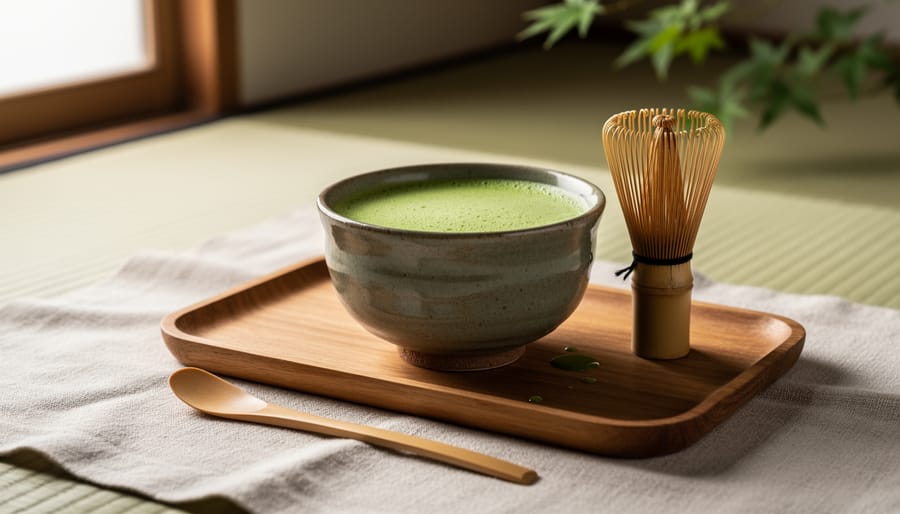
Traditional ceremonial matcha represents the pinnacle of tea service and sets your establishment apart from competitors who only offer basic lattes. This preparation method involves whisking high-grade matcha powder with hot water using a traditional bamboo chasen, creating a frothy, vibrant green tea that showcases the ingredient in its purest form.
Ceremonial matcha appeals specifically to clients who appreciate authenticity and are willing to pay premium prices for exceptional experiences. Serve this in your dedicated boardroom facilities during important business meetings where the ritual of preparation becomes a conversation starter and demonstrates your restaurant’s attention to detail. The slower pace of traditional whisking provides a moment of calm that business professionals often seek.
Consider offering ceremonial matcha as part of exclusive brunch packages, similar to how specialty meal kits provide elevated experiences. Price this option 30-40% higher than standard matcha lattes to reflect the superior grade powder and specialized preparation. Train one or two staff members to perform the whisking technique properly, as consistency matters greatly with this presentation. Pair ceremonial matcha with lighter menu items that won’t overpower its delicate, slightly sweet and umami-rich flavor profile.
Implementing Matcha Drinks Successfully
Sourcing quality matcha makes the difference between a menu item customers rave about and one they skip. Look for culinary-grade matcha from Japanese suppliers for lattes and blended drinks, it offers vibrant color and good flavor at a reasonable cost per serving. Reserve ceremonial grade only for traditional whisked preparations where customers will notice the smoother, more delicate taste. Buy in quantities you’ll use within two months, store the powder in airtight containers away from light and heat, and keep opened packages refrigerated to preserve freshness and that bright green color.
Train your staff on consistent whisking techniques using a bamboo whisk or electric frother to eliminate clumps, which frustrate customers and waste product. Demonstrate the proper water temperature (about 80°C, never boiling) and the ideal powder-to-liquid ratio for each drink style. Run practice sessions during slow periods so baristas gain confidence before the brunch rush hits.
Price matcha drinks 15-20% higher than comparable coffee beverages to reflect the premium ingredient cost while maintaining healthy margins. A classic matcha latte should sit comfortably alongside specialty coffee drinks, not undercut them. Pair these beverages strategically on your menu: suggest the maple matcha latte with your crustless quiche, recommend the iced mint refresher with chipotle roast beef wraps, and position the matcha smoothie as a standalone light option for rushed business professionals. Create visual menu cues that guide customers toward profitable pairings without overwhelming them with choices.
Common Questions About Adding Matcha to Brunch Menus
How long does matcha powder stay fresh once opened?
Store opened matcha powder in an airtight container in your refrigerator for up to three months without significant flavor loss. Purchase smaller quantities initially, 4 to 8 ounces, rather than bulk orders until you establish demand patterns at your restaurant.
What’s the actual cost per matcha beverage?
Expect to spend roughly $0.75 to $1.50 per serving for quality culinary-grade matcha, depending on drink type and portion size. This leaves comfortable profit margins when you price lattes at $6 to $8 and specialty drinks higher. Ceremonial-grade matcha costs more but allows premium pricing for traditional preparations.
Will customers actually order matcha drinks at brunch?
Acceptance rates run surprisingly high, especially among health-conscious professionals and younger diners. Most restaurants report 8-15% of brunch beverage orders shifting to matcha options within three months of introduction.
Do matcha drinks accommodate dietary restrictions?
Yes, matcha is naturally vegan and gluten-free. Simply offer plant-based milk alternatives (oat, almond, soy) to cover the majority of dietary needs without separate preparation protocols.
What equipment do we need beyond standard café setup?
A basic bamboo whisk or handheld electric frother handles most preparations. For higher volume, a dedicated matcha blender speeds service during rush periods.
Timing matcha service during peak brunch hours presents minimal challenges. Most drinks prepare in under two minutes, comparable to espresso beverages, so your existing workflow accommodates them without bottlenecks.
Adding matcha drinks to your Canadian brunch menu creates a competitive edge that resonates with health-conscious professionals and adventurous diners alike. These beverages bring striking visual appeal to your service, meaningful profit margins through premium positioning, and the flexibility to satisfy both traditional coffee drinkers and those seeking lighter alternatives. The antioxidant benefits and sustained energy profile position matcha as a thoughtful addition for corporate catering events where clients want options that won’t cause afternoon crashes.
Start small with two or three core options, perhaps a classic latte and one signature creation like the maple variation, then expand based on customer response and staff confidence. This measured approach lets you refine preparation techniques, gauge demand patterns, and build authentic expertise before committing to a full matcha program. Your brunch menu will stand out in a crowded market while delivering exactly what today’s diners want: quality, innovation, and genuine care in every cup.