
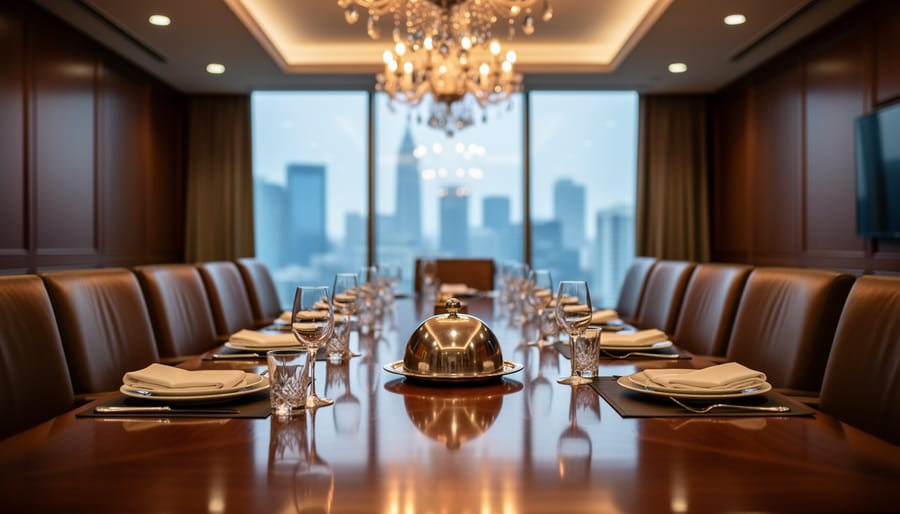
An executive dining room is a private, professionally equipped space designed specifically for hosting business meals, client presentations, and corporate gatherings where first impressions and confidentiality matter. These dedicated facilities combine upscale ambiance with practical amenities like boardroom seating, presentation technology, and personalized catering services to create an environment where meaningful business relationships develop over exceptional food.
Unlike standard conference rooms or public restaurants, executive dining rooms offer the privacy executives need for sensitive discussions while maintaining the hospitality that puts clients and partners at ease. The setting signals professionalism and attention to detail, qualities that often influence how prospects perceive your organization before a single contract is discussed.
For businesses evaluating whether to invest in such a space or book one for an upcoming meeting, the value proposition centers on control. You dictate the menu, the timeline, the atmosphere, and the guest experience from start to finish. This becomes particularly valuable when entertaining high-value clients, conducting board meetings over lunch, or hosting recruitment dinners for executive-level candidates.
The most effective executive dining experiences pair a well-curated menu with seamless service that operates almost invisibly in the background. Whether you’re considering a permanent in-house facility or exploring venue options for a specific event, understanding the core elements of successful executive dining helps you create moments that advance business objectives while genuinely enjoying the meal itself.
What Makes an Executive Dining Room Different
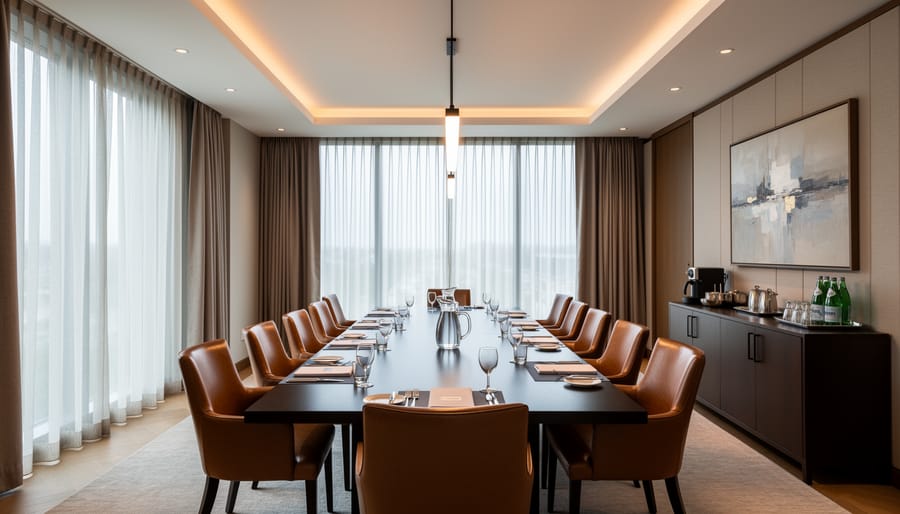
An executive dining room occupies a distinct middle ground between public restaurant seating and sterile conference spaces. It’s a purpose-designed environment where business conversations flow naturally alongside professional food service, without the interruptions of typical restaurant traffic or the awkwardness of sandwiches around a boardroom table.
The defining characteristic is intentional separation. Unlike restaurant seating where neighboring tables might overhear sensitive discussions, these spaces provide genuine privacy through physical walls or strategic positioning. This isn’t merely about secrecy, it’s about creating an environment where participants can speak candidly without self-consciousness or distraction.
- Privacy
- Physical separation from public dining areas ensures confidential discussions remain confidential, allowing teams to address sensitive topics without concern for eavesdropping.
- Dedicated Service
- Assigned staff members focus exclusively on your group’s needs, understanding the rhythm of business meetings and when to be present or discreetly absent.
- Customized Menus
- Pre-selected offerings tailored to dietary requirements and time constraints, eliminating ordering delays that disrupt meeting momentum.
- Flexible Scheduling
- Extended booking windows accommodate longer strategic sessions or multiple courses without pressure to vacate for the next seating.
The ambiance strikes a careful balance between comfort and formality. Furnishings encourage relaxed conversation while maintaining professional decorum, comfortable chairs that don’t scream “boardroom” but also won’t leave executives squirming through quarterly reviews. Lighting, acoustics, and table configuration all work together to support both dining and discussion.
Culinary quality matters more here than in typical meeting contexts. The food isn’t merely fuel or afterthought; it’s part of the impression you’re making. Executive dining menus demonstrate attention to detail and respect for participants’ time, offering sophisticated options that can be enjoyed while maintaining focus on business objectives.
The Business Value of Private Dining Spaces
Enhancing Client Impressions
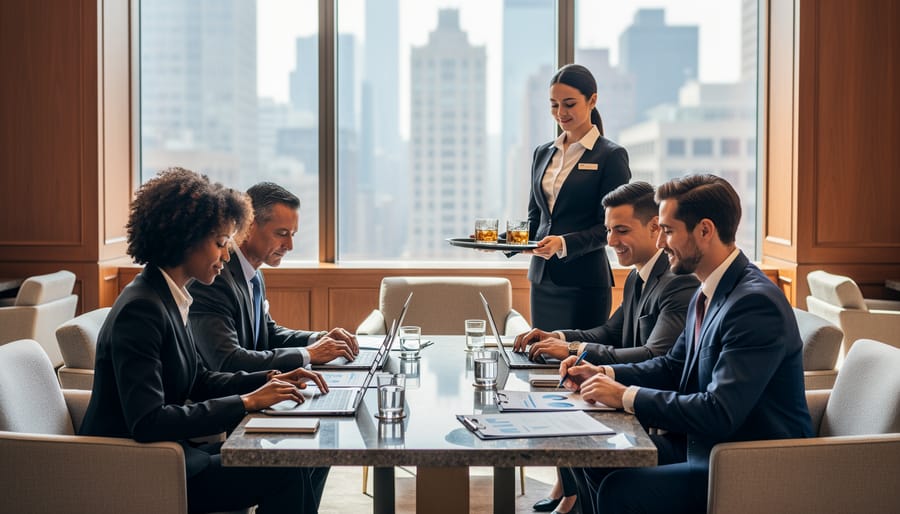
First impressions carry weight, especially when potential deals hang in the balance. A private dining for business meeting signals that you value the relationship enough to invest in the setting. Clients notice the difference between a crowded restaurant corner and a dedicated space designed for focused conversation. The absence of distractions allows your pitch or proposal to take center stage, while thoughtful touches like coordinated table settings and customized menus demonstrate organizational competence before discussions even begin.
The impact extends beyond aesthetics. Research confirms that service quality shapes customer perception in dining environments, and those perceptions transfer to your business credibility. When servers anticipate needs without hovering, when dietary restrictions are handled seamlessly, and when timing aligns with your meeting flow, clients experience professionalism as a cohesive package. These details build trust. They suggest that if you manage a lunch meeting this well, you’ll likely handle their account with similar attention.
Streamlining Corporate Events
Coordinating corporate events typically means juggling multiple vendors, timelines, and communication channels. Executive dining rooms eliminate this complexity by consolidating your meeting space and catering needs under one roof. When your boardroom comes equipped with dedicated culinary services, you avoid the common pitfalls of cold food deliveries, mismatched serving times, and disconnected service staff who don’t understand your meeting flow.
This integrated approach particularly benefits strategic business meetings where timing matters. The kitchen coordinates breaks and meal service around your agenda, not their standard delivery windows. Need to extend a morning session by thirty minutes? Your lunch simply adjusts. Want coffee refreshed during afternoon discussions? It happens seamlessly without disrupting presentations.
Event organizers gain a single point of contact who manages both room setup and menu execution. This eliminates the confusion of explaining your vision separately to a venue coordinator and a catering company, then hoping they communicate effectively with each other.
Menu Considerations for Executive Dining
Signature Items That Impress
Memorable executive dining hinges on selecting dishes that spark conversation without dominating it. The ideal menu features items sophisticated enough to impress yet approachable enough to eat comfortably during business discussions.
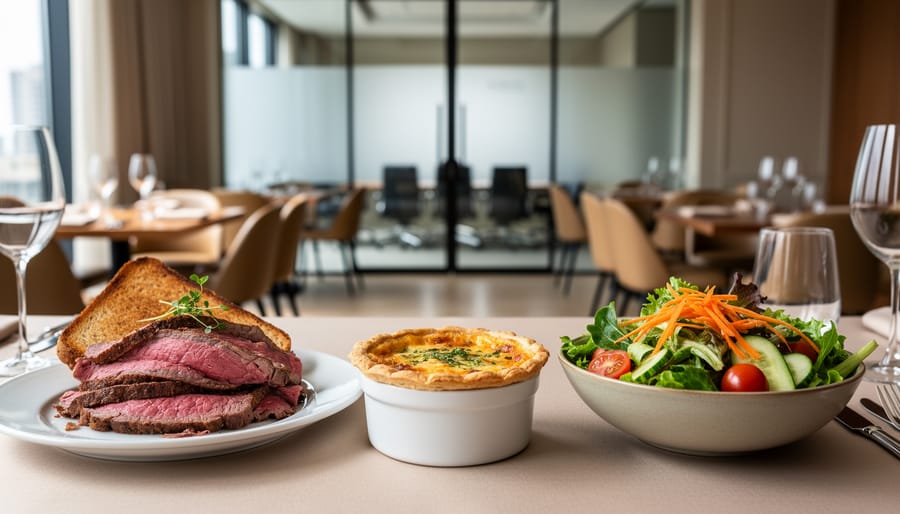
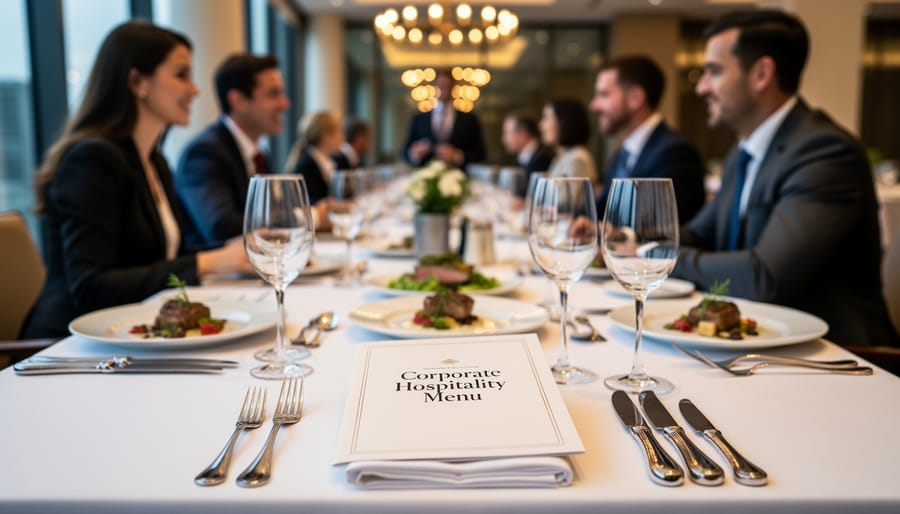
Consider signature proteins like chipotle roast beef, bold, distinctive flavors that demonstrate culinary ambition while remaining universally appealing. These centerpiece options create talking points without requiring elaborate explanations or complicated dining techniques. They’re conversation starters, not distractions.
Crustless quiche exemplifies another strategic choice: elegant presentation meets practical functionality. Without flaky pastry to navigate, guests can focus on the meeting while enjoying a refined dish. These selections accommodate various dietary preferences seamlessly, eliminating the awkwardness of special meal requests.
The best executive dining menus balance innovation with accessibility. Unique preparations catch attention and reflect well on the host’s taste, but familiar foundations keep everyone comfortable. This combination ensures food enhances rather than interrupts the business agenda, leaving guests impressed by both the cuisine and the thoughtful planning behind their experience.
Timing and Service Flow
Executive dining service operates on a fundamentally different timeline than traditional restaurant dining. Where a typical lunch service might prioritize quick turnover, executive dining coordinators structure meal delivery around meeting agendas, not kitchen convenience.
The approach typically begins with pre-plated courses ready to serve during designated breaks, eliminating disruptive kitchen traffic during presentations. Service staff coordinate timing with meeting facilitators, holding dishes when discussions run long rather than interrupting crucial negotiations with premature food delivery.
Between courses, servers adopt a virtually invisible presence, clearing silently and anticipating needs without hovering. This unobtrusive style maintains focus on business matters while ensuring seamless transitions from boardroom discussion to dining conversation.
Smart planners build buffer time into schedules, accounting for the natural relaxation that accompanies good food. A working lunch might compress service into forty-five minutes, while a client entertainment event allows leisurely two-hour pacing where conversation flows naturally between courses.
The key difference lies in flexibility. Executive dining teams adapt real-time to meeting dynamics, understanding that business priorities trump rigid service schedules. This responsiveness transforms meals from interruptions into strategic enhancements of productive gatherings.
Integrating Boardroom Facilities with Dining Services
When meeting spaces and dining services operate under one roof, the result is far more than convenience. This integration creates a seamless flow that fundamentally changes how corporate events unfold. Rather than coordinating between separate vendors for room rental and catering, you work with a single team that understands both the meeting logistics and the culinary expectations.
The coordination benefits start before guests arrive. A unified team can arrange room setup to accommodate both discussion and dining, positioning furniture and technology with meal service in mind. They know precisely when to transition from presentation mode to dining, adjusting lighting and atmosphere without awkward interruptions or external catering staff unfamiliar with the space.
During events, this synergy becomes even more apparent. Staff familiar with both the facilities and the menu can handle last-minute adjustments smoothly, whether that means accommodating an unexpected dietary restriction or extending a discussion period without the food suffering. They understand the rhythm of business meetings and time service accordingly.
The practical advantages extend to problem-solving too. When questions arise about room capacity, equipment needs, or menu modifications, you deal with one point of contact who sees the complete picture. This eliminates the finger-pointing that happens when room providers and caterers operate independently.
For recurring corporate clients, integrated facilities build institutional knowledge. The team learns your preferences, anticipates needs, and refines service with each event. That accumulated expertise translates to consistently excellent experiences that separate venues simply coordinating between departments cannot match.
Planning Your Executive Dining Event
Organizing a successful executive dining event requires thoughtful planning and clear communication with your venue partner. Starting early ensures you can secure your preferred date and customize every detail to match your meeting’s objectives.
Begin by defining your event parameters clearly. Consider your guest count, budget constraints, and the primary purpose, whether you’re entertaining clients, conducting a board meeting, or celebrating team achievements. These factors shape every subsequent decision, from menu selection to room configuration. Understanding the benefits of private dining helps you articulate your vision when consulting with the catering team.
The planning process follows a logical sequence:
- Define your event objectives, guest count, and any special requirements such as dietary restrictions or accessibility needs
- Consult with the catering team on menu options that balance sophistication with practicality for your meeting format
- Arrange the room setup, boardroom style for presentations, round tables for discussion, or theatre seating for larger groups
- Confirm timing details including arrival, meal service windows, and any breaks or transitions between meeting segments
- Coordinate day-of logistics such as audiovisual equipment, parking arrangements, and point-of-contact information
Communication proves essential throughout. Share your agenda with the venue so service staff understand when to deliver courses without interrupting key discussions. Discuss backup plans for last-minute attendance changes, most professional catering teams can accommodate reasonable adjustments with adequate notice.
Don’t overlook seemingly minor details like ambient temperature, lighting levels, and background music volume. These elements significantly impact comfort and productivity during extended meetings. A pre-event walkthrough, even a brief virtual one, helps identify potential issues before your guests arrive and ensures everyone shares the same expectations for the day.
When you choose an executive dining room for your business gatherings, you’re making a strategic decision that extends far beyond simply feeding your team or clients. You’re creating an environment where ideas flow more freely, relationships deepen naturally, and professional interactions carry the weight they deserve. The combination of privacy, exceptional cuisine, and dedicated service transforms routine meetings into opportunities that people remember long after the last plate is cleared.
The venues that excel in this space understand a fundamental truth: corporate dining is about supporting your business objectives while honoring the people around your table. They recognize that a well-executed lunch meeting with thoughtfully prepared dishes can accomplish what hours in a standard conference room cannot. The right setting removes distractions, elevates conversations, and demonstrates to clients and team members alike that you value both their time and their experience.
As you plan your next important business event, consider what an executive dining room brings to the table, literally and figuratively. The seamless integration of professional facilities with culinary expertise gives your meeting a polish and efficiency that standard venues simply can’t match. Whether you’re negotiating a crucial deal, celebrating a team milestone, or building relationships with key clients, the decision to upgrade your next meeting with dedicated private dining speaks volumes about your commitment to excellence. It’s an investment in outcomes, not just overhead.