
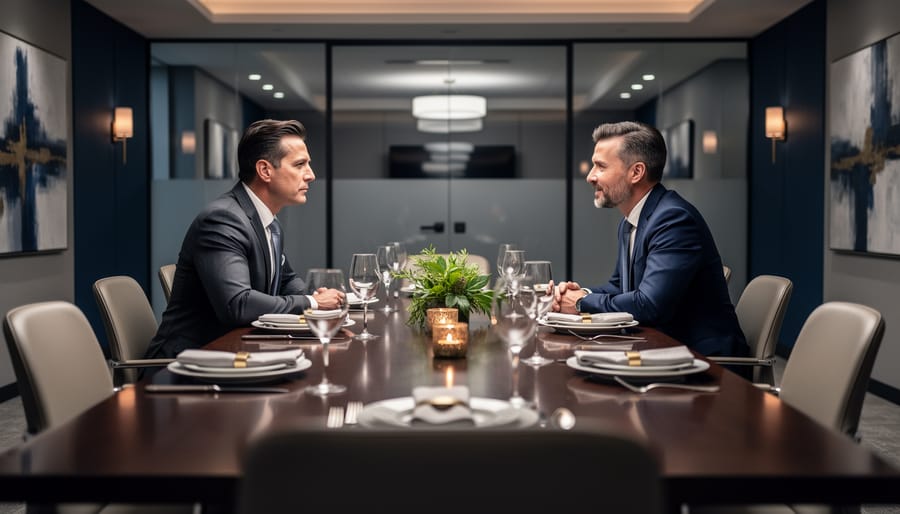
A private dining experience transforms business meals into strategic opportunities by delivering confidential, fully customized service in a dedicated space that reflects your organization’s standards. Unlike restaurant bookings or standard catering, executive private dining combines curated menus, professional boardroom settings, and attentive service that adapts to your meeting flow without interruption. The result is an environment where deals close, relationships deepen, and your team can focus entirely on the conversation that matters.
For business professionals planning critical meetings in 2026, the distinction lies in control. You choose every detail: menu composition that accommodates dietary needs and preferences, timing that aligns with your agenda, and a private setting free from the distractions and lack of confidentiality found in public restaurants. This level of customization signals respect for your guests and creates the conditions for productive dialogue.
The practical appeal extends beyond client meetings. Executive private dining supports board presentations, team celebrations, and recruitment conversations where atmosphere directly influences outcomes. When you need more than a meal, when the setting must support your business objectives rather than compromise them, private dining delivers measurable advantages.
Successful implementation requires a partner who understands both hospitality and corporate dynamics. The right service provider brings diverse menu options that satisfy varied palates, maintains dedicated facilities designed for business use, and executes with the professionalism your reputation demands. Whether you’re hosting six colleagues or twenty stakeholders, private dining turns a necessary meal into a competitive advantage.
Why Private Dining Matters for Executive Success in 2026
The landscape of executive dining has shifted dramatically. What once served primarily as a venue for celebratory meals now functions as a critical business tool that directly impacts deal outcomes and relationship longevity. In 2026, professionals who understand this shift gain measurable advantages over competitors still relegating important conversations to crowded restaurants.
Consider the practicalities. When you’re negotiating a sensitive partnership or discussing proprietary strategies, the booth at your favorite bistro becomes a liability. Neighboring tables, server interruptions every twelve minutes, and ambient noise levels that force you to lean forward conspiratorially, these aren’t minor inconveniences. They’re barriers to productive dialogue that cost you focus, time, and sometimes confidentiality.
Private dining environments solve these fundamental problems while creating opportunities that standard restaurants simply cannot match:
- Complete control over timing and flow without pressure to vacate the table
- Privacy that allows frank discussion of financials, personnel decisions, and strategic pivots
- Menu customization that accommodates dietary restrictions without awkward public negotiations
- Professional atmosphere that signals respect for the relationship and the stakes involved
- Technology integration for presentations or contract review without fumbling with personal devices
- Elimination of background distractions that fragment attention during critical conversations
The competitive edge extends beyond the meeting itself. Clients and partners remember where conversations happened. A boardroom lunch with thoughtfully selected catering communicates preparation, investment in the relationship, and attention to detail. These impressions compound over time.
The businesses that have embraced dedicated dining spaces, whether on-site boardrooms or partnered facilities, report faster decision cycles and stronger client retention. They’ve stopped treating important meals as afterthoughts squeezed between calendar blocks. Instead, they’ve recognized that the environment where agreements take shape influences the quality of those agreements. That recognition, translated into consistent practice, becomes a strategic advantage that competitors struggle to replicate.
The Essential Elements of an Executive Dining Experience
Menu Flexibility That Matches Your Business Agenda
Your meeting runs ninety minutes. One attendee avoids gluten. Another skips red meat. A third needs to eat and present simultaneously. A rigid menu turns these realities into obstacles. Menu flexibility solves them before they arise.
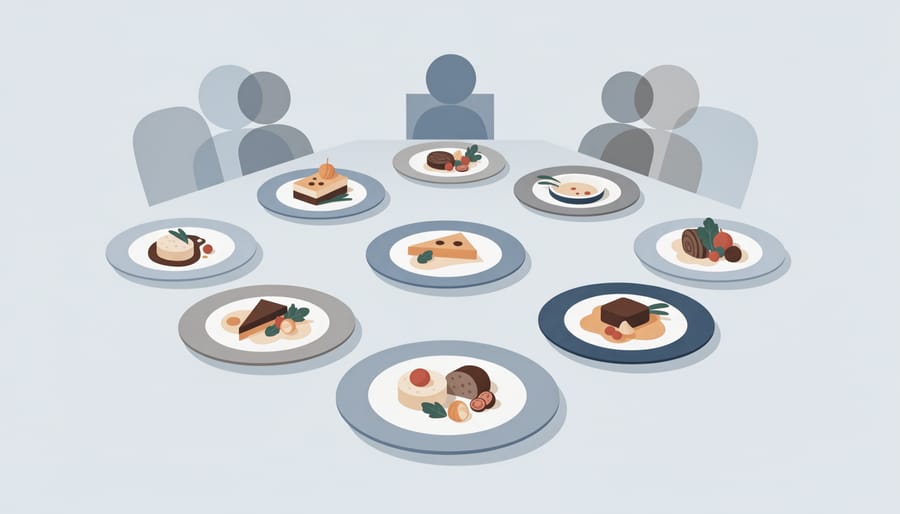
Executive dining demands more than a standard catering package. You need options that adapt to your specific business scenario, whether that’s a working breakfast that fuels focus, a midday strategy session requiring substantial yet refined dishes, or a late afternoon negotiation where lighter fare keeps everyone alert.
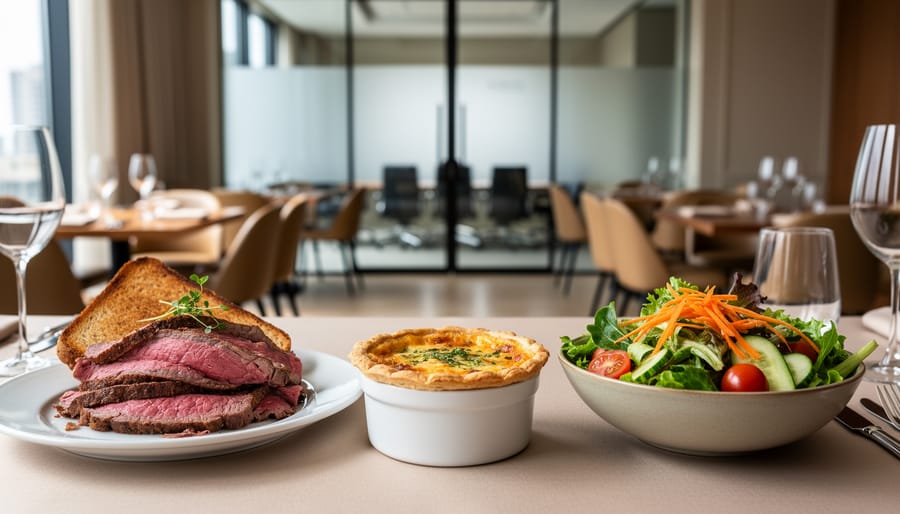
Consider how different meeting types demand different approaches. A rapid board update benefits from individually portioned items like crustless quiche that participants can eat without interruption or mess. A longer client cultivation lunch allows for more substantial selections, chipotle roast beef provides the substance executives expect without the heaviness that triggers afternoon fatigue. These aren’t random menu items; they represent strategic choices designed around how business actually unfolds.
Dietary accommodation moves beyond checking boxes. A truly flexible menu integrates vegetarian, gluten-free, and other requirements seamlessly into the overall offering rather than treating them as afterthoughts. When every attendee finds appealing options without calling attention to their restrictions, you eliminate a common source of meeting friction before it starts.
The best catering partners build menus around your agenda’s timing and flow. They understand that a presentation-heavy morning needs minimal plating complexity, while a relationship-building lunch can feature more interactive elements. This alignment between food and function keeps your business objectives front and center.
Dedicated Spaces Designed for Confidential Conversations
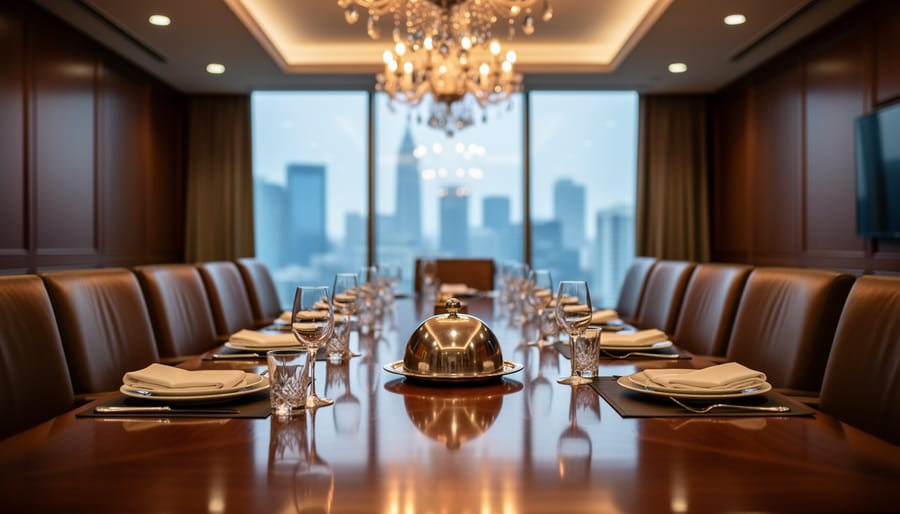
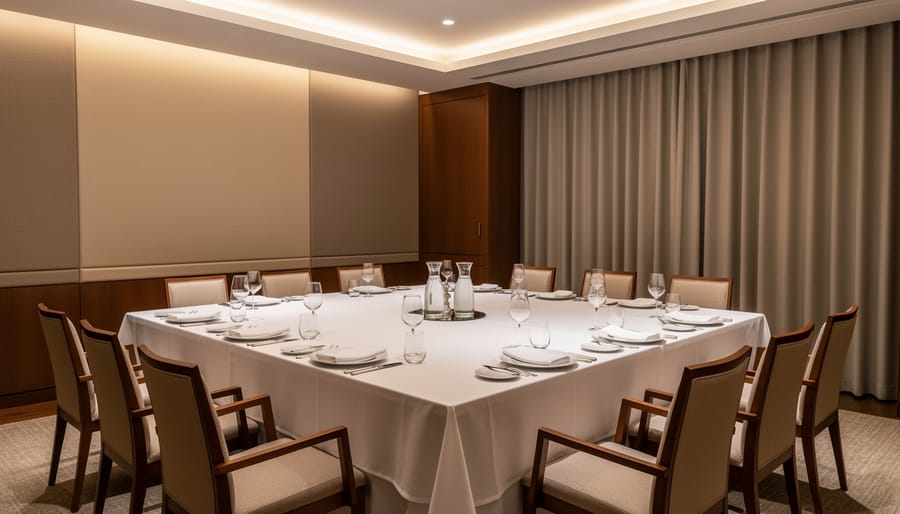
Four walls and a door aren’t enough when the conversation involves merger talks, personnel decisions, or competitive strategy. True executive privacy requires spaces engineered for discretion, soundproofing that keeps sensitive discussions contained, layouts that prevent visual eavesdropping, and entrances positioned away from public traffic.
Boardroom facilities designed for private dining incorporate the technology infrastructure busy professionals expect: reliable high-speed connectivity, presentation displays positioned for clear sightlines, and power access at every seat. These aren’t afterthoughts; they’re built into the room’s design so your team can review financial projections between courses or conduct a hybrid meeting with remote stakeholders without technical fumbling.
The professional atmosphere matters as much as the privacy. Appropriate lighting that transitions from presentation mode to dining, acoustics that allow normal conversation without raising voices, and furniture scaled for both working and eating. When your space communicates competence before anyone speaks, you’ve already set the tone for productive outcomes.
Dedicated facilities eliminate the anxiety of wondering whether the table beside you is listening or whether your video call is disrupting other diners. Your agenda drives the environment, not the other way around.
Service That Anticipates Without Interrupting
The difference between good catering and exceptional executive service lies in timing. A professional team reads the room, clearing plates between agenda items rather than mid-sentence, refilling water glasses without hovering, adjusting temperature or lighting based on subtle cues. This calibrated attentiveness means executives never need to hunt for necessities or manage service staff during critical negotiations.
The best private dining service establishes a rhythm: briefing coordinators before the meeting to understand flow and key moments, positioning refreshments strategically so participants can self-serve without breaking concentration, and remaining accessible yet invisible. Staff should anticipate needs, replacing coffee carafes before they empty, having dietary alternatives ready without being asked, while respecting the confidential nature of discussions. When service becomes seamless background support rather than a series of interruptions, business conversations maintain momentum and participants stay focused on decisions rather than logistics.

Crafting the Perfect Private Dining Menu for Business Occasions
Selecting the right dishes for a business dining occasion requires balancing practical considerations with the impression you want to create. The menu should support conversation rather than distract from it, accommodate diverse dietary needs without making anyone feel singled out, and match the timing and tone of your meeting.
For breakfast meetings that precede a full day of work, focus on energizing but not overly heavy options. Pastries, fresh fruit platters, and protein-rich selections like crustless quiche give attendees choices without overwhelming them before 9 AM. These gatherings typically run 60-90 minutes, so portion sizes should be moderate, enough to satisfy without inducing the mid-morning slump that derails productivity.
Lunch discussions present more menu flexibility since they occupy a natural break in the workday. Here you can introduce heartier selections like chipotle roast beef sandwiches or composed salads that demonstrate thoughtfulness without requiring formal dining etiquette. The key is offering variety: vegetarian options alongside meat selections, lighter choices next to more substantial plates, familiar items balanced with something slightly unexpected that sparks conversation.
| Meal Type | Best For | Menu Approach |
|---|---|---|
| Breakfast | Team briefings, client check-ins | Light proteins, pastries, fresh fruit; easy to eat while standing or seated |
| Lunch | Extended negotiations, board presentations | Diverse plated or buffet options; substantial enough for main meal, balanced for afternoon focus |
| Dinner | Relationship building, celebration events | Multi-course potential; elevated presentations that allow for leisurely conversation |
Dietary accommodations should never feel like afterthoughts. Build your menu from the ground up to include vegetarian, gluten-free, and allergy-conscious options as equal choices rather than substitutions. When everyone at the table has genuinely appealing selections regardless of restrictions, you eliminate the awkwardness of special requests and demonstrate inclusive leadership.
Consider the mechanics of eating during active discussion. Finger foods work for standing receptions but can seem too casual for seated strategy sessions. Dishes requiring knives and active cutting create pauses in conversation that may feel awkward during intense negotiations. Items that can be eaten with a fork alone, or that come pre-portioned, keep the focus on business rather than plate management.
The best executive menus also account for timing. If your meeting agenda includes presentations or detailed document review, plan lighter courses that won’t demand attention. Save more complex or interesting dishes for natural conversation breaks when attendees can genuinely appreciate what they’re eating.
From Corporate Events to Client Meetings: Matching Your Private Dining to Your Purpose
Different business occasions demand different dining approaches. A quarterly board meeting requires efficiency and focus, while a partnership negotiation benefits from a relaxed atmosphere that encourages conversation. Understanding these distinctions helps you design private dining experiences that support rather than distract from your objectives.
For board presentations and formal meetings, prioritize streamlined service that keeps everyone engaged. Select menu items that can be consumed without excessive coordination, individual platters of crustless quiche or chipotle roast beef allow participants to eat between discussion points. Keep beverages simple and readily accessible. Your boardroom setup should emphasize the business at hand, with catering that functions as fuel rather than spectacle.
Client meetings occupy a different space entirely. Here, the meal becomes part of the relationship-building process. Offer menu variety that demonstrates thoughtfulness about preferences and dietary needs. A selection that includes vegetarian options alongside protein-rich choices signals attention to detail that clients notice. The pacing matters: allowing natural pauses between courses creates space for genuine conversation beyond the contract terms.
Team strategy sessions benefit from energy-sustaining foods that support extended thinking. Provide options people can graze on during brainstorming rather than rigidly scheduled courses. Fresh options prevent the afternoon energy crash that kills creative thinking.
Partnership negotiations require the most nuanced approach. The dining experience should feel generous without appearing as though you’re trying too hard. Choose quality over quantity, fewer well-executed dishes outperform an overwhelming spread. The physical setup matters here: round table arrangements facilitate discussion better than boardroom-style seating.
The common thread across all scenarios is intentionality. Match your food selection, service timing, and space configuration to what you’re trying to accomplish. Private dining succeeds when it enhances your business purpose rather than competing for attention.
What to Expect When You Choose Professional Catering for Your Executive Dining
Professional catering for executive dining operates on a defined process that removes uncertainty from your planning. Understanding this timeline helps you allocate resources and communicate effectively with your team and guests.
The typical engagement unfolds in five stages:
- Initial consultation where you outline your meeting objectives, guest count, dietary requirements, and desired atmosphere, usually 2-3 weeks before your event
- Menu selection and customization based on your business agenda, whether you need energizing breakfast items or a sophisticated lunch spread with options like chipotle roast beef
- Logistics confirmation including boardroom setup, serving times aligned with your meeting schedule, and any special requests for presentation or service style
- Final headcount and details review 48-72 hours before the event to ensure accurate preparation
- Day-of execution where the catering team arrives early, sets up discreetly, and remains available without disrupting your business discussions
Expect your caterer to ask detailed questions during consultation. They’re not being intrusive, they’re gathering intelligence to prevent issues. Share your meeting’s start time, critical discussion windows when service should pause, and any VIP attendees with specific preferences.
Communication happens through a dedicated point person, typically an event coordinator or account manager. You’ll receive written confirmation of all details, from menu selections to arrival times. This creates accountability and gives you documentation to share with assistants or colleagues managing logistics on your end.
The day of your event, professional caterers arrive before your guests, complete setup, then step back. You won’t see frantic activity or last-minute adjustments. Service staff understand executive dining requires invisibility, present when needed, absent when business intensifies. This choreography is what you’re paying for, and it’s what separates professional catering from casual food delivery.
Making Private Dining a Regular Part of Your Business Strategy
Most businesses treat private dining as a special occasion expense rather than an ongoing investment. That mindset leaves money on the table.
When you schedule regular executive dining sessions, monthly client lunches, quarterly board meetings, or weekly strategy sessions, you create consistency that builds stronger relationships. People remember the restaurant where you celebrated closing a deal, but they trust the partner who thoughtfully hosts them every few months in a professional setting.
Establishing a recurring relationship with a caterer transforms logistics from a planning burden into a simple phone call. Your preferred service learns your team’s dietary preferences, your typical meeting flow, and which menu items generate the most positive responses. That institutional knowledge means less briefing time and fewer last-minute adjustments for each event.
Budget predictability improves when private dining becomes routine. You can negotiate preferred pricing for regular bookings and plan catering costs into quarterly budgets rather than scrambling to justify each event individually. Finance teams appreciate the consistency.
The compound effect matters most. A single impressive lunch might win a contract, but four thoughtfully hosted meals throughout the year build the kind of partnership that weathers market downturns and competitive offers. Your clients start suggesting your boardroom for their own important meetings, the clearest indicator that your dining strategy is working.
Start small. Block one recurring slot per month, even if you don’t yet have a confirmed guest. The commitment creates urgency to fill it strategically.
The boardrooms where you conduct business and the meals you share during those meetings aren’t separate concerns, they’re interconnected elements that either support or undermine your professional objectives. Private dining experiences create the conditions where genuine business relationships develop, where trust builds naturally alongside strategic conversations, and where your attention stays focused on what matters rather than fighting distractions from inadequate facilities or mediocre food.
Throughout 2026, the executives who’ll stand out aren’t necessarily those with the biggest budgets or the flashiest presentations. They’re the ones who recognize that how you host a meeting signals how you’ll handle a partnership. The space you choose, the meal you provide, the service your guests experience, these details communicate your standards before you’ve presented a single slide.
Havana Lunch’s boardroom facilities and diverse catering menu address precisely this reality. From chipotle roast beef that satisfies varied palates to crustless quiche that accommodates dietary preferences, the options work for actual business scenarios, not theoretical perfect conditions. The dedicated spaces support confidential conversations without compromise.
Your next important meeting deserves more than hoping a crowded restaurant table will somehow work. It deserves an environment designed for executive outcomes.